Showing posts with label bioregional economy. Show all posts

28 September 2013

How Public is Public Money?

Of the many deceitful slogans which the Conservatives used when they came to power the 'bonfire of the quangos' has perhaps had the least justification in practice. A whole range of boards and partnerships are creeping back into existence, responsible for public money, but with no clear sense of how the public view will be represented or how they will be accountable to the public.

My own particular source of concern is the Local Enterprise Partnership. These were first mooted some 18 months ago, at which point they had no clearly defined powers and there was apparently no funding to accompany the establishment of such bodies. I remember thinking how unlikely it was that anybody would take on the challenge of local economic regeneration without any financial support. How foolish I was, and how cunning others were, because over time large amounts of public money have been promised to these bodies that those with foresight or perhaps inside information made their own.

The GLEPs are supposed to represent the country's 'natural economic areas', although there is no theoretical consideration about how such economic areas might be defined. The work that the LEPs might undertake is limited by the narrow and pro-growth conceptualisation of the problem we face according to the government rubric:

'Our economy is currently too dependent on a narrow range of industry sectors. We need an economy driven by private sector growth, with business opportunities evenly balanced across the country and between industries. We also need to reduce burdens for businesses, particularly in terms of lower tax levels, planning and other administrative burdens.'

While this is the rhetoric, the reality is that those who have always had their snouts in the trough of government subsidy to business have created structures to funnel public money in their direction, resulting in a map of meaningless and unplanned areas on the government website.

In Gloucestershire our LEP is called G1st LEP, G1st being an unsuccessful regional development company that has already received large amounts of money from the county but with no clear evidence of its having created jobs or brought prosperity. But it cleverly included the letters LEP in its name, built a new website, and was accepted by the Business Secretary as being the regeneration body for the whole of our county. At this stage, remember, there was no indication that money was coming and so it had no serious competitors.

But money has certainly followed and with increasing speed since the publication of the Heseltine report No Stone Unturned--In Pursuit of Growth, a report which has only proved that under those stones lurk a regiment of people who have made a career of parroting the same pro-growth, pro-business catechism without the need for a track-record of success. All money to be invested in regeneration by central government, or £2 billion of it in 2015-16, will now be funneled through these bodies. Yet there has been no opportunity for the public to become involved in discussions about how they might like to see regeneration happen, whether economic growth is in fact beneficial for local communities, whether we might focus on resilience and sustainability instead, or whether bioregions might be better natural economic areas than the curious regions illustrated in the map.

In Stroud we are particularly angry that money which was originally our money is now to be sent to the LEP, to be controlled by people with no democratic authority over this money, and we have to make a case to have some of it spent in our area. When the government cut our central funding grant they told us that in future we would receive money through a New Homes Bonus, already requiring us to build new houses in order to be properly funded. But now 40% of this New Homes Bonus will go to the LEP directly and we will not see any of it back unless we subscribe to the sort of view of economic development that this unaccountable body dictates. There is also talk of funding for further education institutions similarly passing through the LEP before being received by them.

Martin Whiteside, one of our district councillors here in Stroud, has referred to the birth of the GLEP as the immaculate reconception of the quango and, while we feel the parentage of our county body is particularly unclear, the accountability of these bodies that will use public money according to their own political priorities and without proper accountability should be questioned everywhere that LEPs lurk.

 .

2 September 2013

The Gypsy Rover, the Norman Yoke and the Land Value Tax


I have always loved the folk-song The Whistling Gypsy. In fact, I like it so much that I have been known to sing it in those situations of cultural exchange where, far from home and in a foreign language zone, you are called on to share something. But I have always been rather disappointed by the heroine who, although following the gypsy rover, convinces her father to accept her decision by pointing out that he is 'Lord of these lands all over'.

But, like many aspects of folk culture, it occurred to me recently that this is a song of great subtlety. It is not that the gypsy is also a land-owner and therefore deserves the hand of the lady whose heart he has won, rather he considers himself lord of the land that he roves through. He has, in other words, gone through exactly the sort of mental reinterpretation we need to go through as a society. This takes some effort because it requires  us to throw off the shackles of a thousand years of feudalism.

Andy Wightman has done great service in the case of Scotland in challenging the legal effort that has been invested in constructing the reality of land ownership to the extent that the land we should share is littered with 'Trespassers will be prosecuted' signs and the authors of those signs are paid large sums of EU money for the privilege of having sole use of what is our national economy's most valuable resource. His books Who Owns Scotland links the rise of the lawyer's trade and their wealth to the need of warlords to provide written justification for their ill-gotten gains, and in an era when literacy was a rare privilege a legal document could exclude almost everybody from the argument.

This is my reason for supporting a Land Value Tax and this is what I will be arguing when I come up against Vince Cable on Tuesday evening at an RSA Screens event. He and John Christensen will find other reasons to support the taxation of land, some pragmatic and some rather dangerous--based in arguments about the 'inefficient' use of land. Property development is perhaps the most egregious current example of private profit at social cost and returning a large proportion of the gain from planning uplift to the community is an immediately appealing consequence of introducing LVT.

But for me our alienation from the landour economys most valuable natural resourceis at the root of our alienation from nature itself and from our own freedom. This does not mean that we all need to be peasants but it does suggest that the way of the whistling gypsy may be a surer route to happiness than the way of the suited business executive or the zero-hours-contract worker for whom he creates a job.
.

23 July 2013

Rewilding our Economy?

I went to see the second part of the documentary Wild Carpathia at the Romanian Embassy last night. It was a delightful event, although the audience were rather like characters out of a Forster novel waiting for the monsoon. Our patience was rewarded, however, by a lovingly crafted portrayal of a life in an unspoiled environment for which many of us are nostalgic but which still exists in the areas of Romania in the Carpathian mountains and the Danube delta.

I am interested in this idea of wild. It seems to refer to something out there, a way of life others preserve and that you/we can visit before returning (flying back) to our modern, electronically connected lives in complex, energy-intensive cities. And how wild is too wild? There are lynx, wolves and bears roaming free in the Carpathians, a source of delight to the film-makers. But how would we feel about our children playing in forests there?

Don't get me wrong: I am a sucker for the simple peasant life, and I particularly enjoyed the city of Sighisoara, where the historic towers were once used by the guilds to defend the city against invading Turks. Attempts are being made to revive the guilds and to keep their skills alive. This is all music to the ears of an economist like me who writes about a 'bioregional economy'. It was also interesting to note that it was the capitalist era that saw the most serious destruction of Romania's patrimony and that the communist regime protected the country's heritage and its natural beauty.

But I have a sneaking feeling that there is a level of inconsistency here: are the film-makers suggesting that we should idealise this lifestyle from afar, or is there a proposal wrapped up in the soft focus and ethnic music that we should attempt to re-create a land-based, self-reliant and simple life in England's green and pleasant land? While we are being invited to admire the peasants it is also suggested that our 'slow tourism' visits are essential to support their continued existence, which feels akin to philanthropy for the globalisation age and leads me to question why some of the world's citizens are granted the bounty to be able to patronise others.

To propose a future based around provisioning based on your local land is to risk ridicule and derision. Yet simultaneously many idealise exactly this kind of society outside their own backyard. While technological advances mean that the bioregional vision will represent a backward step, or a backward existence, it will still require a great deal more physical work and considerably reduced mobility. I would argue - and do argue - that quality of life would be massively enhanced, but how many would choose this as their daily reality rather than their annual escape?
.

16 April 2013

Of Land and Liberation in Bahia


It is quite clear that a more locally based self-provisioning economy would require a change in the pattern of land ownership from that which prevails across the world today. This is why I am a strong supporter of land value tax and land reform, both of which are policies necessary for the transition to a bioregional economy. I am currently in the north-east of Brazil in the state of Bahia. Although it was the area first settled by Portuguese colonisers and then fought over by them, the Dutch and the French, much of its land is extremely arid and away from the rivers the possibilities for agriculture are very poor. Salvador, the colonial capital, was also the centre of the slave trade and still has a strong African influence in the culture and the cuisine, and for this reason was the place where the secret martial art of capoeira was developed.

The African and slave history also gave rise to some interesting patterns of community and land ownership. Most directly we have the quilombros, communities of escaped slaves who fled into the interior and set up villages where they reproduced their African culture and created new traditions of shared use of land and systems of commons. Perhaps the experience of slavery had convinced the of the importance not only of freedom but also of distributive justice? Many of these communities survive today and the federal government of Brazil is supporting them in finding ways to legally defend their access to and use of the land.

Since its independence Brazil has, in a limited sense, taken an emancipatory approach to land ownership. If land is left unused then it reverts to the state. Other communities, known as fundos de pasto, have taken advantage of this by moving onto this state-owned land to find the means for a sustainable livelihood. These communities are made up of poor rural farmers without their own land, and people from the cities who cannot make a living there. We met Gilca Oliveira at Salvador University who is part of a research team that has produced a wealth of research on these alternative land-based communities, including those connected to end MST movement.

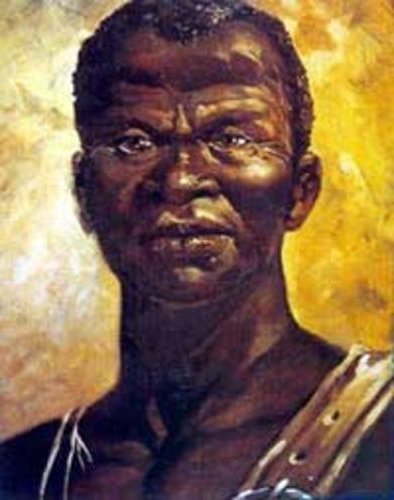
We also found here a hero to inspire resistance to neoliberalism. Zumbi dos Palmares is commemorated with a statue in one of Salvador's main squares. Zumbi was born in Palmares, the most famous and successful quilombro but was not content until all other slaves had been freed. He fought a violent struggle for emancipation and is today commemorated as the first freedom fighter for African slaves in the Americas with a national holiday in Brazil called the National Day of Black Conscience.
.

20 March 2013

Budget Day: Time for Some Radical Proposals

Today is budget day and the desperate economic crisis suggests the urgent need for some radical policy proposals. Unusually, the BBC has allowed its business correspondent to actually think outside his corporate box and propose some genuinely innovative policies. We have already covered the proposal for negative interest rates on this blog, which might serve to circulate money currently being hoarded by companies and financial institutions.

More interesting is the fact that some ideas to tackle the debt directly, since until this millstone is removed the economy cannot flourish. Under the rather misleading heading of 'Helicopter Money' Lawrence Knight suggests the creation of new money for public investment or to be given to citizens to spend. Although he claims that the process of money creation is 'rather hazy' he seems to accept the proposal for direct money creation along the lines argued for by monetary reformers. Professor Richard Werner's letter to the FT earlier this month is like sunshine on a hazy day in terms of its clarity of presentation. His proposals for direct money creation by the government to fund public infrastructure projects is the sort of advice the Chancellor should pay heed to.

Relying on Steven Keen as cover, Lawrence Knight, BBC business correpondents, then makes a proposal to actually just cancel the debts. The concept of 'odious debt' finds its place for the first time on the BBC's business pages, although the social and political implications of the massive reapportioning of assets that such a debt repudiation would result in are not discussed. As a long-term supporter of the idea of odious debt I am greatly cheered to see the BBC at least reporting this proposal, if not supporting it.

Meanwhile, Green MEP Caroline Lucas has proposed a Private Members' Bill on Land Value Taxation. The bill is summarised as follows:

'A bill to require the Secretary of State to commission a programme of research into the merits of replacing the Council Tax and Non-domestic rates in England with an annual levy on the unimproved value of all land, including transitional arrangements; to report to Parliament within 12 months of completion of the research'.

How might a Land Value Tax help us out of our current predicament? I think it is a novel and creative solution. It identifies clearly the source of all true value within an economy: the land itself. It was forgetting this link that led to the divorcing of real and nominal value and bankruptcy for many economies. Iceland and Cyprus have become demonstrably bankrupt but many of Europe's economies would already have been obliged to call in the receiver had they been corporations.

A Land Value Tax would challenge the government's so-called 'presumption in favour of sustainable development' that is supposed to underpin its approach to planning found in the National Planning Policy Framework. What this policy and its unaccountable but clearly biased National Inspectorate really supports, however, is speculative developments whose value ends up in the pockets of property developers and those who hold land banks. A Land Value Tax could end this at a stroke, since the value of development would be taxes into the public coffers. While this might put put a break on speculative development in the short term, in the medium term it would shift the ownership and value of land, breaking the bottleneck that prevents citizens and communities from developing their local land for social and environmental benefit.
.

14 March 2013

Embracing the Yoghurt Culture

I have it on the best authority that Bulgaria is being overrun by migrants. My authority is Maria Nedeva, a sociologist of science at the University of Manchester and author of the authoritative Money Principle blog. Maria has grown understandably tired of having her country and her countryfolk run down by the right-wing press and has put me straight on a few matters.

First, the Bulgarians who are already in this country are a highly skilled bunch. Like Maria herself many are academics, working in universities to enable the sort of global education that prepares young people for a globalised world. Bulgarians also thrive in the world of computer programming, using their skills to clean up as consultants, since they are not yet permitted full freedom to work here. Their skills in this area is unsurprising given that the first electronic computer was invented by the son of recent Bulgarian immigrants to the US, John Atanasoff.

Far from desperate Bulgarians seeking to escape dreary post-Soviet lives and failing public services, they are in fact experiencing a wave of inward migration from those who have grown tired of life in the UK. The Telegraph reports (while simultaneously advertising) the excellent quality of life offered by a rural Bulgarian existence: the article suggests a sort of late-middle-aged Good Life in a country where land is not the preserve of red-coated, red-faced men chasing red-furred wildlife.
A website encouraging elderly Brits to retire to Bulgaria explains how the strength of community and pace of life might remind immigrants of life in their own country BT, i.e. before Thatcher. On another Bulgarian blog, You'll Like it Here, the author welcomes the British government's attempt to make the UK seem unattractive to potential immigrants, a position he is pleased to endorse:

'They do make a valid point however – Great Britain is indeed a grim, dangerous place with glaring economic difficulties. Therefore the only responsible thing we Bulgarians can do as Europeans is to extend a helping hand and invite all Brits who’ve had enough.'

Given their relatively small population of 7.5 million people it would be understandable for the Bulgarians to feel swamped by the high rates of immigration from Britain in recent years. So many British ex-pats now live in Bulgaria that they have their own support website Brits in Bulgaria. And this is really the point, because rather than pulling up the drawbridge and repelling borders the Bulgarians are welcoming economic migrants who would appreciate the splendours of their fertile soils and excellent climate. The hateful xenophobic articles in the Daily Bigot are a strong incentive to make one up sticks and explore the opportunities for a life of skilful self-reliance.
.

11 March 2013

Planning for Sale

Today's revelation that local councillors are selling their knowledge of the planning process to those who would devastate our countryside will be used as further evidence of the corruption of politics, but really the culprit here is national government, whose planning policy is being written by developers for developers, much as banking regulation has been written by bankers for bankers.

One of the Tory government's first acts when coming to power was to sweep away 64 years' worth of planning policy, carefully made to respect social and ecological needs, and to replace it with the National Policy Planning Framework. The NPPF has been identified by many as a developers' charter. Even the far from radical Friends of the Earth have judged it to adopt a deregulatory approach 'designed to prioritise private business interest in the name of economic growth.' It represents a significant shift in power in favour of development and against the environment.

There are profits to be made here: the ‘communications consultant’ Curtin & Co.  bought up the web address http://www.thelocalismbill.co.uk/ to give their jubilant account of the significance of these proposals:

‘There is no doubt that the local government and planning landscape will change considerably in the next 12 to 18 months. There are still significant holes in the proposed legislation and Curtin & Co will be monitoring the progress of the bill as well as making representations on its community engagement aspects. Curtin&Co’s founder and chief executive is the author of Managing Green Issues (Macmillan, 2001) which advocates many of the aspirations of the Localism Bill and this is embedded in our methodology.’
So much for 'green planning' which, like the green economy itself, is becoming a corrupted concept.

My Green House colleague Jonathan Essex, a civil engineer who works for the sustainability consultant Bioregional, transcribed a recent presentation by Hugh Ellis, Chief Planner for the Town and Country Planning Association given at EcoBuild on 7 March. Mr Ellis outlined how the need for developments to be 'viable', for which read 'profitable' could reduce the ability of local planning authorities to require high environmental standards or address the issue of climate change when giving planning permission. He concluded as follows:


'Ultimately I will leave you with this thought. The climate science has got much worse over the past five years. We planning in this country for the wrong future. We are planning for example on sea level rise for 60-80cm where we know now scientifically we will have at least 2m of sea level rise. I go and talk to Hull and many places on the East coast who do not have a future beyond 2050 if we do not make radical changes to the ways in which we organise ourselves and our economy. Set in that context my challenge to government and all of you is that we need a national plan that can take this nation through the challenge of climate changes and manage that process with social equity and with great outcomes. The national planning policy framework doesn't do that. Why? Because it has no strategic context. We've got rid of regions. We've got rid of the Royal Commission on the Environment and Pollution. I do really wonder whether this framework is the beginning, truly of the Age of Stupid.'

This is a disturbing conclusion: we can no longer use the planning process to save ourselves at the national level. But for me the issue also has a much more personal aspect. I represent Valley ward, and that is no ordinary valley, it is the Slad Valley where Laurie Lee wrote Cider with Rosie and, as I claimed without embarrassment in our local paper, the most beautiful valley in the country. Profit-hungry developer Gladman are using the NPPF to attempt to opportunistically destroy this valley by putting 140 houses onto a green field. This will be an example that will soon become obvious to us in all our precious landscapes that the government we have now is allowing greed and profit to destroy the hopes and homes of the hard-working people of Britain.
.

6 March 2013

Land for People and for Food

Biofuels are back in the news: today MPs will decide on whether to continue to offer subsidies to crops that can be burned in power stations to create electricity. This problem began with what seemed like a simple and natural solution to our energy problems: plants absorb carbon dioxide as they grow which is balanced by its release when burned to create power. This simplistic idea was grasped by an industry that rapidly developed and sadly persuaded the EU to offer subsidies. The later research demonstrated that many of the biofuels crops actually produce more CO2 than they save.

The other side of the biofuels debate is the land grabbing that is gathering pace in countries that have less power in the global trade system and whose politicians are prepared to see their land be used to feed the lust for energy of those in richer and more powerful societies. Campaign group Grain have accounted for 17 million hectares of land that has been grabbed by global agribusiness to produce fuel crops between 2002 and 2012. Much of this land is in some of the poorest countries in the world; it has been diverted from producing subsistence for local people into growing crops to produce energy for the fuel-hungry West.

Grain, the NGO that supports small farmers across the world, identifies the EU subsidy regime as the source of the problem. The latest proposal sets a target of an energy equivalent of 40 Mtonnes of oil to be provided by biofuels as part of the 20% renewables target to be reached by 2020. While the Green Party welcomes the emphasis on renewables it is keen to ensure that this is not achieved at the cost of the destruction of habitats and livelihoods.  Oxfam also express deep concern about this policy, arguing that it will increase global hunger directly, through removing peasants from their land, and indirectly, by increasing the price of staple foods on the global market.

As with so many of the examples of tension between the economy and the environment the problem arises from the scale of operations and the failure of accountability this causes. This is where the proposal for a bioregional economy is so powerful. If regions were aiming to become self-reliant in energy and food production within their boundary, and introduce tariffs for the import of these products, then they could make decisions about balancing the protection of their local environment with their need for energy generation. It is the creation of a global trade in fuel crops and the exploitation of the environments of those for whom we cannot have accountability that is the source of the devastation caused by biofuels.
.

13 February 2013

Incredible Edible

In another quirky twist it turns out that the first identified source of horseflesh in the UK is in the Yorkshire town of Todmorden, which has thus far been famous for the community food growing project known as Incredible Edible Todmorden. Since the relevations that the FSA have found horse meat on the premises of a local abattoir there has been another round of reflection on how to inspect an regulate and increasingly complex food supply chain.

Since the BSA and salmonella scandals in the 1990s there have been periodic kerfuffles about where on earth our food comes from. In the academic literature the word most often used is that of 'provenance', which led to the food of origin appearing on the food label. But labelling is an inadequate response to consumers who wish to understand the provenance of their food, and not only because an abattoir that is capable of passing of horse as cow is hardly likely to be concerned about which farm the horses came from. To understand the deeper level of our connection with food we may need the French word terroir, a sense of the cultural connection with local soil expressed through food as well as other forms of folk culture.

Here is how I describe this connection in my book, The Bioregional Economy:


'The Gloucestershire love of apples is an example of what the French would call an attachment to terroir, the sense of pride in your local place and its specialities that could be taken as constitutive of a bioregional approach to provisioning. The contrast with a globalised market approach to provisioning is instructive. While the market economy needs global uniformity and standardisation, the bioregional economy revels in difference and local distinctiveness. The word ‘terroir’ comes, of course, from the word terre meaning land and it is this attachment to land, your local land, as expressed in the particular products it is suited to producing that lies at the heart of the ability of a bioregional economy to enable a process of environmental re-embedding.'

Of course buying local from farmers you know and, if you are not a vegetarian, eating animals that you have seen grazing in local fields, also offers immediate practical reassurance that you know what you are eating in a way a labelling system never can. For more on the delights of local provisioning in the Stroud Valleys please visit the beautiful blog Let Them Eat Hay by doyenne of the local food movement Helen Pitel.

So why have we moved from this satisfying local provisioning to a world of complex supply chains where regulation is virtually impossible? The answer is obvious: it increases the ability to extract value for the food corporations, which has also undermined the livelihoods of farmers. In a report from Green House thinktank published today, commodities expert Thomas Lines describes a world crisis for farming, a crisis of reduced agricultural incomes, and an ageing farming population. The author argues that a new approach is needed, building on known methods – a greater variety of staple crops, traditional farming techniques and agro ecology – to create a food system which is economically as well as ecologically more resilient and sustainable. His recommendation to farmers and growers north and south is that they should get themselves out of the market system and focus on providing good quality food for local markets.


22 January 2013

Of Resources and the Origins of War


If, in response to the emerging detail on the horrors of the attack on the Algerian gas-plant, you have found yourself asking ‘What on earth were they doing in the desert?’ you would probably have moved rapidly on to realising that they were guaranteeing the lifestyle to which you, and I, have become accustomed. The idea of raiding the globe for resources, and using the necessary amount of violence to ensure access, has been a commonplace to the powerful nations of the world. It is this commonplace that the idea of a bioregional economy seeks to challenge.

We need to understand our economy as a post-colonial economy and, since Britain could be argued to have invented the most successful method of colonial exploitation, it is my view that we have a particular responsibility for identifying and challenging this view of how we undertake the provisioning of our most basic resources: energy and food. The curious informal partnership between the British state and the East India and other trading companies enabled the massive expansion of markets for our goods and source of the resources we need to make them and to feed our expanding lifestyles.

Once we had found a method for controlling global trade and profiting from it, the pressure to produce goods and services within our own territory waned. In fact, British economists specifically argued that such a strategy was misguided, partly as a result of their own experience but, perhaps more importantly, to persuade other nations to join a trading system within which Britain was already dominant. The spread of the market model, as an economic reality and a mythological force, was essential to the extension of the Great Powers of 18th and 19th century Europe. Adam Smith provided the myth of ‘the bartering savage’ while Galton provided the parallel myth of the racial superiority of the caucasian and ‘Ricardo had erected it into an axiom that the most fertile land was settled first’ (Polanyi, 1944: 192), suggesting that what was taken from the indigenous peoples of colonised lands could have been only marginal lands. John Locke  gave the  jusification for enclosing land, writing that putting a fence around land and improving it through agriculture gave settlers a right to own the land.

Between them these mental constructs provided intellectual cover for the adventures of the far from noble savages who travelled the world seeking fame, resources and profit from the late 15th century onwards.  This caused a fundamental change in our attitude to geopolitics: the central role of foreign policy was now ensuring access to resources rather than protecting the nation’s borders. As Polanyi has it, ‘no people could forget that unless they owned their food and raw material sources themselves or were certain of military access to them, neither sound currency nor unassailable credit would rescue them from helplessness’ (Polanyi, 1944: 199).

This domination, based around an extending empire backed up by financial and military power has made it seem entirely natural to us that the resources of the world can belong to us in exchange for money. It is not surprising, however, that those who live in those lands that are now occupied by massive extraction plants and suffer the consequent pollution do not see things this way. Years ago now I wrote an article called ‘Fascism or Bioregionalism’ but it might have rather been called ‘Colonialism or Bioregionalism’. My commitment to a bioregional future is based around the need to reduce carbon emissions and build stronger, more resilient communities. But there is also a commitment derived from the Quaker peace testimony that requires us to seek out the origin of all wars. In today’s world it is the global supply chains that impose our greed on the land of others that are the greatest source of conflicts present and future.
.

5 January 2013

Evolution become Conscious


Following up on my earlier post about 'joining the evolution', Michael Dunwell, my fellow green economist from the Forest of Dean, writes to tell me that Teilhard de Chardin thus described the human race in his book The Phenomenon of Man, published posthumously in 1955. It prompts me to post a talk I gave at a seminar in London on Europe Beyond Growth shortly before Christmas.

I’m going to start by saying something about science. On Monday I listened to Evan Davies interviewing fisheries minister Richard Benyon about his decision to oppose the latest EU fisheries proposal which Benyon claimed he was doing ‘on scientific grounds’. Davies brought in the top fisheries scientist from Defra, who argued for the EU proposal. Evan Davies seemed genuinely perplexed by the inability of the scientists to agree. He was seeking a ‘right’ answer, that was scientifically proved and unassailable.

Years ago I put together a report called ‘I Don’t Know Much About Science But I Know What I Like’. It’s Martin Amis’s joke but I’ve always enjoyed it. The reason I enjoy it is that it achieves with wit and brevity the task of challenging the right of science, usually in this context meaning statistical evidence, to trump other forms of thought.

Caroline Lucas has said that we are going to be the first species that is able to scientifically monitor our own extinction. Consecutive reports from the IPCC suggest that she is right about this, but I am a bit more optimistic. My optimism organises itself under my latest personal mantra: ‘Join the Evolution’ and it works like this.

We are unique in being a self-conscious animal. When other animals receive indications that they are reaching the limits of their evolutionary niche they respond to these by finding a new niche, or by failing to reproduce, or otherwise by ensuring that their numbers decline. As humans we are too clever for that. We can use our clever minds and our technology to keep pushing the boundary outwards, ignoring and filtering out the clear evidence that the ecological safety-limits have been exceeded.

So as a self-conscious animal we need to evolve self-consciously. We need to find a way to get a collective grip on ourselves, to stop believing our own fantasies, to get back down to earth. This is what I mean by ‘joining the evolution’,  and I would argue that it is a desire to do something like this that has brought you here today.

So I have nothing against science, and I think being able to prove that resources are not limitless and have some idea of the scope of the problem we are facing is vitally important in convincing those trapped in the scientistic mind-set. But it is not going to save us. We need much more human solutions to do that.

21 December 2012

Finding Your Place in Space

In spite of the cultural dominance of the idea of 'science' and forming understandings on the basis of 'facts' it is clear that what you think you are is crucial to defining what you are and what you may become. The furore over an ancient calendar belonging to a people who were arguably destroyed by the technologically superior culture of our ancestors is demonstrating today the influence of myths in determining our sense of ourselves in time. I want to argue that we should also be asking questions about how we think of our place in the world in a geographical sense.

Most of us are defined by political boundaries. I am a councillor for Stroud District, but when I think of 'Stroud' it is the people and the landscape that make it a place I love. This emotional identification of places through natural landforms and human and animal companions lies at the heart of the reconceptualisation of our world that bioregionalism demands. It is for this reason that I called my book The Bioregional Economy. I suggest bioregions as the basic provisioning units of a system of self-reliant local economies that will be the sustainable economy of the future. But perhaps more importantly I suggest the importance of a undertaking a rethinking of who we are that involves allowing our selves to be defined much more by the part of the world we inhabit.

Blogger and - crucially - geologist Nick Arini has taken this idea on an produced a really interesting and useful blog about what the boundaries of his bioregion might be. Nick concludes that proponents of bioregions often suggest one characteristic to use in defining their boundaries: watersheds, say, or geological underpinnings. He argues for, and I would agree, a fusion of characteristics, and that the definitional characteristics are specific to each bioregion. He concludes:

'I wanted to consider a bioregion as a living being and this idea that each region is unique and is defined by its own set of characteristics supports this notion. Applying the same formula to each different bioregion is likely to yield sub-optimal results. Listen to your region and let it tell you what characteristics are important for defining its identity.'

He is suggesting sketching the boundaries of other UK bioregions, although since this process is all about knowing your backyard this process is best done as close to home as possible. If you would like to follow Nick's example and define your bioregion please be sure to let me know how you get on.
.

13 November 2012

Modelling a New Economy

Yesterday I received copies of my new book, The Bioregional Economy. This is always an exciting moment, and also a nerve-wracking one. In the book I make a strong proposal for rethinking the economy to achieve maximum human well-being within the frame of the 90% reductions of carbon emissions that the Tyndall Centre says we need to avoid the worst of climate change. This means some really radical changes to how we work, the level at which decisions are made, and how resources are owned and controlled. I do not shy away from any of these difficult decisions.

I was presenting the proposal to the Geography Department at Glasgow University last week. Afterwards a Greek colleague came up and told me that the proposal is obvious. While this isn't the sort of thing you like to hear when you have spent time writing a book about a radically new proposal, I know what he meant. It turns of that Theo Kromydas co-wrote the Wikipedia entry on Epicurus, and so I am taking this as evidence that, as all good ideas must, I have backing from an ancient Greek philosopher. The book's subtitle is 'Land, Liberty and the Pursuit of Happiness', and it seems that this might have been written by Epicurus, whose philosophy was based on the understanding that humans, like all animals, seek pleasure.

According to Kromydas, Epicurus has a sophisticated view of pleasure, which included ethical behaviour. Bodily pleasure that causes intellectual or moral distress is not the sort of pleasure we should be seeking. His definition of happiness is a mind free from disturbance and a body free from pain, a state he referred to as 'ataraxia'. One of the points I make most strongly in my book is that, while fossil-fuelled capitalism has produced a bewildering array of material products, it has not brought us peaceful minds and hence cannot claim to have achieved happiness even in the Western countries.

I will be launching the book in the Convent Parlour at Roehampton University on 12 December at 5pm. Since my lucky number is 12 I could not have a more auspicious day. If you can help me publicise the book either by organising a local meeting or writing a review for a publication or online outlet please get in touch. My esteemed corporate publisher is also offering a fairly hefty discount on the book until 14 December, so an opportunity to do some Christmas shopping.
.

27 July 2012

Understanding A Job-Creating Recession

The strange paradox of the UK economy post-2008 is that figures for output and figures for employment do not match. While the numbers that measure the actual output of the economy look disastrous, and increasingly so, the story on jobs is that many more of them are being created. The level of employment in the economy as a whole is up by 159,000 jobs in the 12 months to May. Even allowing for the fact that many of these are part-time jobs, this is still an impressive performance for an economy in deep recession. While the unemployment figures illustrated in the graphic are less encouraging, and show a clear divergence between the claimant count and the actual rate of unemployment, this still doesn not look like an economy suffering the worst downturn on record.

Part of this is undoubtedly resulting from the sorts of social factors that economic statistics can never capture; employers protecting their staff, perhaps because they value their skills or perhaps because they know their children; people protecting each other, even though there is not really enough work for them to do. The rhetorical attacks on the unemployed and all those who seek social support in times of crisis has also undoubtedly led many of those who are functionally unemployed to assign themselves to a range of more acceptable social categories, of which self-employment is the most popular.

On the other hand we may be observing what economists like to call a break in the trend, a historic shift in the relationship between some of the fundamental economic variables. One aspect of the change is the shift in the focus of productivity away from financial services and towards real economic output. After all if the financial sector is famed for creating money from thin air, a relatively labour-light process, then we cannot be surprised if the value-to-weight ratio of the economy is lower since that sector has massively contracted.

As in the case of the ending of growth, this may be another sign that the economy is already in transition towards a more sustainable pattern. If one of the features we are expecting is the rehabilitation of manual labour then we would expect to see a shift in the balance of productive assets away from capital and towards labour. This trend will speed up rapidly as we approach the exhaustion of fossil fuels or their prices rise as we begin to take climate change seriously. Perhaps the job generation that we are seeing now is already an indication of the green economist's claim that a green economy will be an economy that creates jobs.

This paradox is, in reality, not much of a paradox at all, but rather another indication that the way we measure our economy is not rational. If we had always measured output that really generated well-being, rather than counting money and counting jobs, we would have been able to formulate policies to reinforce what we value. This shift away from accounting to true economics could be one of the best outputs from this period in our economic history, which, in its own way, is proving particularly productive.
.

30 May 2012

Right or Left, or Right or Wrong?

This morning I am going to do something I certainly never expected to do on this blog: agree with the business editor of the Daily Mail. Alex Brummer has published a book called Britain for Sale: British Companies in Foreign Hands – The Hidden Threat to Our Economy. Brummer claims that more than half of British companies have already been sold, and that 'foreign companies acquired £30billion worth of British enterprises in 2009. In 2010, that rose to a value of £54.5 billion.'

He claims that 'Foreign corporations also currently control 39 per cent of UK patents. This is far more than the percentage of foreign-owned patents in the U.S. (11.8), Japan (3.7) or even the European Union as a whole (13.7)'. He makes a strong argument that, when companies that were once British are bought, we lose not only knowledge about industrial processes, we also lose skills and are effectively selling off our tax base. Given the right-wing slant of the book, it is unsurprising that little is made of the inability of government's to take a strategic approach when companies are privately owned, never mind owned by overseas investors. This has been particularly striking, and particularly risky, in the case of our energy policy.

Brummer makes his case in a BBC interview with Nick Higham. In his interview, Nick Higham criticises Brummer's case as an 'old-fashioned view of protectionism'. Brummer responds that this is a question of national and economic security, rather than a challenge to global free trade. This position is, I think, inconsistent and even incoherent. It is also dangerously outmoded: more localised production and distribution systems are necessary because of their energy efficiency, as well as the higher levels of resource security they offer.

My own proposal for a bioregional economy has its basis in social justice, as well as security and sustainability. I would go much further than Alex Brummer dares and question why global corporations should wander the world, using their ill-gotten gains to buy up other people's resources. This is the root cause of global inequality, but also undermines accountability. Linking people back to their local natural resources gives them an incentive to protect them long-term.
.