Showing posts with label John Maynard Keynes. Show all posts

8 October 2012

Spies, Cash and Conspiracy Theories

The similarities between the current global economic crisis and that of the 1930s has led many more thoughtful commentators to re-evaluate the importance of history to the development of policy. A striking recent example, which has been poorly trailed but is well worth watching, is Stephanie Flanders recent series Masters of Money. The link with the Open University shows, but isn't it time we all knew a little more about the variety of economic theories? Flanders makes a sterling effort to explain the thinking of three 20th-century giants - Keynes, Hayek, and Marx - none of whom, interestingly are being paid much heed by contemporary politicians.

I revealed my own interest in economic history in a recent article that was posted on the New Statesman economic blog Current Account. What perked my interest was the revelation that Harry Dexter White, Keynes's sparring partner at the Bretton Woods negotiations and effectively the architect of the post-war global financial settlement, was in fact a Soviet spy. As I point out in the article, in 1944 the US and Soviet Union were still allies, so this is not such a bizarre situation as it might have been by 1948, but none the less it does raise questions about exactly what the negotiators at Bretton Woods were seeking to achieve.

Perhaps the most touching lesson from history is that 100 or so years ago key figures in public life made it their life's work to understand the complexities of the economy. Their objective was not self-aggrandisement or self-enrichment but the impulse to make life better for their fellow citizens. While I find Hayek's idea that politicians should never intervene in markets to be utterly misguided, I can understand how he learned this lesson during the hyper-inflated Vienna where he was a young man, and that his scholarship was dedicated to preventing the same sort of suffering from occurring again. How distant and quaint such motivations seem today, when the highest aim of most authors is to be granted the accolade of a TV series.

As I conclude in my article about Bretton Woods, both the authors of the compact appear to have died of broken hearts: Keynes was dead within two years of the ending of the conference, worn out by his attempts to ensure peace in his time and ours. White outlasted him by two years but could not survive the pressure of the McCarthy era. He suffered a heart attack shortly after giving evidence to McCarthy’s House Unamerican Activities Committee in August 1948.
.


11 February 2012

Why is a Local Authority Not Like a Business?


It is the budget-setting season and in local authority debating chambers across the land administrations are trying their darndest to squeeze every last penny out of budgets - the age of austeria requires nothing less of them.

The hegemonic idea of business as the superior form of organisation was damaging during the boom, when it was used as justification for rising rates of inequality and falling ethical standards, but during the bust it is downright dangerous. Councillors, especially Tory councillors, have often run small businesses and they try to run council budgets the same way. So if you have any influence over councillors, or are one yourself, please make this argument loudly during the process of budget-setting.

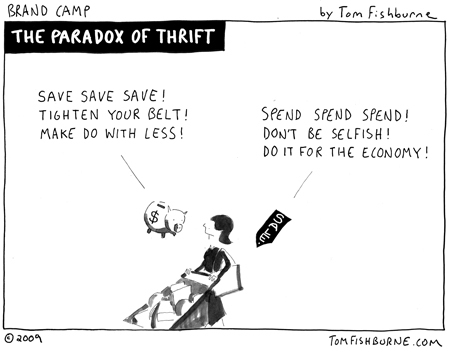
I have previously blogged about what Keynes called the Paradox of Thrift, but I want to explore it in a bit more detail as it applies to local authority budgets. If you are a business, then money you spend goes on the negative side of your balance sheet - it is a leakage, its benefits are external to your balance-sheet and therefore it should be minimised. This is because your business has clear boundaries. If you are a highly diversified business you may be able to keep a much higher degree of spending within your organisation, which is why SMEs are facing unfair competition, but none the less keeping costs down makes absolute sense.

If you are a local authority all the businesses within your area are inside your organisation, since all pay taxes if they thrive as do the people they employ. The boundary you should bear in mind when writing budgets is the local economy: just as you try to minimise costs within a business your priority as a politician should be to minimise leakages from the local economy. To cut your own budgets to the bone, or not to spend money budgeted in this period, is like cutting your own income rather than cutting your own outgoings.

What Keynes so elegantly described in his multiplier theory is that public spending and private spending follow opposite dynamics. An understanding of the systemic nature of a local economy, the importance of the circulation of money rather than individual transactions, and the importance of multiplier effects are all vital to those who set budgets within local authorities. Sadly, too many are bringing the mindset they used to maximise profit on an individual balance-sheet into the council chamber, and through their misplaced thrift they are undermining our local economies already struggling as a result of centrally imposed spending cuts.
.

7 February 2012

Stop Digging

Although we seem to be living in an era of forgetfulness when it comes to the insights of John Maynard Keynes, to my mind we should characterise the disastrous economic situation of the late-phrase capitalist economies in terms of a chronic failure of aggregate demand. In a famous passage in the General Theory Keynes describes how different cultures have dealt with the problem of insufficient demand:

‘Ancient Egypt was doubly fortunate, and doubtless owed to this its fabled wealth, in that it possessed two activities, namely, pyramid-building as well as the search for the precious metals, the fruits of which, since they could not serve the needs of man by being consumed, did not stale with abundance. The Middle Ages built cathedrals and sang dirges.’ (The General Theory, 1936: Bk 3, chap. 10, sect. 6)

Keynes is credited with solving the problem of the Great Depression through his theory of the multiplier effect of demand stimulation policies, although others have argued that in reality it was the switch to a wartime economy that put the capitalist economy back on an even keel. This was effectively a strategy of making enormously big holes across Europe and then spending around another decade gradually filling them in; this is obviously to make no comment on the loss of life and livelihood that was the price of this strategy.

Keynes’s argument was for injection of demand by public authorities, but the private sector had already begun its strategy of increasing demand before the stock-market crash and subsequent Depression. Although I should say at the outset that I do not believe that changing the sorts of light-bulb used can save us from ecological catastrophe, it may be that understanding the behaviour of the Phoebus cartel of light-bulb manufacturers just might.

The group was made up of all the leading manufacturers of the day including General Electric, Osram and Philips. At a meeting in Geneva in 1924 the Phoebus group decided to enforce a maximum life-time of the light-bulb at 1000 hours, eschewing the superior design already achieved by Edison around the turn of the century. A long-lasting life-bulb reduced their profits and so innovation was restricted. The oldest light-bulb in the world is still in place and casting light over the Livermore Fire Station in California: it is 110 years old.

The strategy of creating demand through the deliberate design of obsolescent or poorly made goods flourished in the years following the war. It was parodied in a contemporary film by Alexander Mackendrick called The Man in the White Suit. In the film Alex Guinness played Sidney Stratton, a research chemist working in the textile industry. Stratton’s expensive research to discover a miracle fibre that is not subject to the depredations of dirt or wear is successful and uses it to make a luminous white suit. His moment of glory is short-lived, however, since both managers and unions recognise the dangers posed by a suit that does not need to be replaced: Stratton is sacked and pursued both metaphorically and actually by both sides in the age-old capital-labour battle. Eventually he discovers that his suit is vulnerable to sunlight, but he remains undeterred and we leave him in the final scene striding purposefully off to another research laboratory where his attempts to create genuinely sustainable products will be doubtless be greeted with horror.

In the early days of the enthusiasm for creating demand its proponents were quite explicit about the various techniques that they used. King Camp Gillette, inventor of the disposable razor, argued that 'We have the paradox of idle men, only too anxious for work, and idle plants in perfect conditions for production, at the same time that people are starving and frozen. The reasons is overproduction. It seems a bit absurd that when we have overproduced we should go without. One would think that overproduction would warrant a furious holiday and a riot of feasting a display of the superfluous goods lying about. On the contrary, overproduction produces want.'*

We can be cynical about the profit motives of the industrialists, but there was a genuine desire to avoid unemployment and the suffering it caused, and to stimulate demand by any means to make sure there were enough jobs to go around. The strategy worked within its own terms, but it has left us in the disastrous position where efficiency in terms of energy and resources has no place in the modern economy. Now that we recognise the limits to growth we need to unpick this Keynsian solution and rethink the role of aggregate demand as the solution to our economic woes.

*quoted at Slade, G. (2006), Made to Break: Technology and Obsolescence in America (Cambridge, Mass.: Harvard UP),p. 10.
.

6 August 2011

How can we solve the crisis in the Eurozone?

The growing tension in the Eurozone is matched by a total failure by the media to give space for alternative views of how our economic lives, and especially our monetary policy, might be determined. Last night's Radio 4 debate, hosted by the well-meaning and well-informed Paul Mason, Economics Editor of Newsnight, fell into the trap of setting up a false dichotomy between Keynesian and Hayekians. Three conclusions emerged: the audience was partisan and wholly unrepresentative, the two iconic figures around whom the debate revolved both had some arguments on their side, and none of this has anything to do with how our governments make policy. Plus, of course, the obvious fact that neither Keynes nor Hayek could imagine a world where ecological limits mean that economic growth can no longer happen.

Green Economics grows in strength and confidence: we are growing clearer about the design of our alternative future, and the expanding evidence of the failure of globalised capitalism adds to this confidence. An example is the new work by James Robertson, a book addressing the question of money to be published by Green Books next year. The publisher is allowing us all a sneak preview of Robertson's proposal for managing the national money supply.

James Robertson has been right about money for years. He has a claim to be one of our leading economists, and yet his work is excluded from the public debate. In this chapter he provides an excellent critique of what is wrong with a money system based on bank debt and, more importantly, cogent proposals for an alternative system.

It is important that we know where we are going, and all those who support a just and sustainable economy should read and understand the Roberthttp://www.blogger.com/img/blank.gifson proposal. But it does not help us with the transition. We cannot be naive about the vested interests dedicated to maintain the current system in place, and the courage required to politicians to stand against them.

What would a transitional policy look like? Presumably politicians would have to secretly agree to simultaneously suspend trade in the national debt of all the leading economies, and exchange transactions between their currencies. The moratorium would allow breathing-space for a new international agreement between nations to be drawn up: this would be a democratic agreement based on national control of sovereign debt and currencies exchanges: Bretton Wood with knobs on, as this blog has been arguing for since the beginning of the crisis. The market has no solution: only by taking political action can its destructive consequences be forestalled.
.

23 June 2011

Interest, Money, but No Employment for Keynesian Scholars


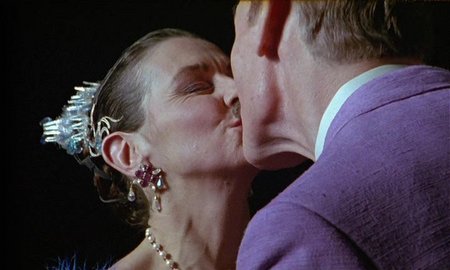
Keynes was an example of that rare thing: a sociable and entertaining economist. Not only was he married to a Russian ballerina, he was a member of the Bloomsbury set and a friend of Virginia Woolf. According to a biopic of Wittgenstein by Derek Jarman that I watched recently, he also wore rather natty and colourful clothes. The film, with a script by Terry Eagleton, is well worth watching.

How glamorous this all seems compared to the life of an academic economist today. The poor quality of work is surely related to the absence of creativity and joy. Now Keynes has even been excluded from the conference celebrating the 75th annivesary of his own major work, The General Theory of Employment, Interest and Money. The work cannot be ignored, but its relevance in this time of crisis is so threatening that only those who oppose it were invited, according to a scathing critique by Ann Pettifor.