30 June 2011

Resist Divide-and-Conquer Tactics


The Tory rhetoric over today's strike is a clear attempt to divide and conquer. We are told that the poor downtrodden taxpayer is subsidising the fat cats of the public sector, and that private-sector pension schemes are poor and the public-sector schemes should be as poor. No attempt is made to argue that private companies should provide properly for their employees' retirement. We are to be set against each other, workers in private or public sector, taxpayers and public sectors workers, when it is quite apparent that most of us fall into more than one of these categories at once.

I am proud to be striking today. I am proud to be defending the right of myself and my colleagues to contribute a reasonable amount to dignity in old age, should we be lucky enough to get there. I was pleased to receive the instruction to strike from my rep., together with the helpful information that 'UCU believes the proposals are not only unfair, but totally unnecessary. The TPS was renegotiated in 2007 to make it affordable and sustainable over time. There is no crisis or deficit in the scheme. This is nothing more than an ideologically motivated attack by a government that wants us to pay for an economic crisis we did not create.'

The changes to pension contributions, which represents an increase of some 50% or about £150 per month, are actually a tax specifically on the public sector, the government's target of choice, to extract money to pay for the deficit caused by the banking crisis. Since our future pensions will be politically controlled there is no limit on the number of times the government can come back to us for more money, or how many times they can reduce our consitions, our pay, or our future pensions. No limit, that is, except our unified political resistance.

In The Great Transformation Karl Polanyi gives an interesting new perspective on the strike. If labour is to be distributed in a market, he argues, then the seller, i.e. the worker, has a perfect right not to sell until his price is reached. It is the absurdity of considering labour a commodity like any other that causes the strike to appear anomalous. Here is his lucid prose from p. 239:

'Actually, strikes in vital services and public utilities held the citizens to ransom while involving them in the libyrinthine problem of the true functions of a labor market. Labor is supposed to find its price on the market, and other price than that so established being uneconomical. As long as labor lives up to this responsibility, it will behave as an element in the supply of that which it is, the commodity "labor", and will refuse to sell below the price which the buyer can still afford to pay.

Consistently followed up, this means that the chief obligation of labor is to be almost continually on strike. . . The source of the incongruity of the theory and practice is, of course, that labor is not really a commodity, and that if labor was withheld merely in order to ascertain its exact price society would very soon dissolve for lack of sustenance. It is remarkable that this consideration is very rarely, if ever, mentioned in the discussion of the strike issue on the part of liberal economists.'
.

28 June 2011

Wales: A Co-operative Nation?


Since I'm a bit short of time I thought I would share a short speech I gave earlier today at a meeting in Cardiff Bay for the Assembly Cross-Party Co-operative Group.

Last week we had the Chief Executive of the co-operative development organisation in British Columbia giving a lecture called 'Co-operation and the Wealth of Nations' here in Cardiff, in fact in the building where I work at UWIC in Llandaff as part of a nationwide speaking tour. He made an interesting and important point about the failure of our economy in recent years and how this is linked to the failure of our political system.

Restakis looked back to the first half of the 19th century, when the franchise was extended beyond the wealthy elite and when the co-operative movement was founded. This parallel is not a coincidence, since both were a response to the development of capitalism and the way it concentrated power and resources in a small number of hands.

Restakis's conclusion was that, while we did gained the right to elect our government we did not see the extension of a similar level of democratic involvement in the economic sphere. And more importantly, he argued that so long as economic power is concentrated and unresponsive, it can feed back into our democratic system and poison it. Whether we think of the ownership of media outlets by the super-rich or the ability of politicians to use their influence to buy themselves well-paid directorships we see evidence of his argument all around us.

While I'm in the business of mentioning our impressive new teaching building I should tell you that the Co-operative Group will also be using it for their conference called Wales: A Co-operative Nation this coming weekend. I'd like to link this title to that of an inaugural lecture by one of our Professors, which he called 'Entrepreneurship: Do we have a word for it in Welsh?' This title had a question mark at the end of it, and I'd like to answer what may have been a rhetorical question with the word 'co-operation'.

When I wrote my thesis some ten years ago now I concluded that the reason successive entrepreneurship action plans had not been successful in Wales was that they focused on individual self-advancement, whereas the culture of Welsh people is that we should all advance together. I found during my research that the Branson model of enterprise was viewed as getting on at the expense of others and was widely despised. I coined the term 'associative entrepreneurship' to describe the creative energy that could be released through shared enterprise for the good of the community, and I used Tower Colliery as a practical example of this associative entrepreneurship.

The destructive impact of the globalised, autocratic economy has become clear in the past few years. Both the financial crisis and the economic crisis it has produced are consequences of economic power being in too few hands. They are also products of the 'myth of the market' which states, in the face of all historical evidence, that we no longer need politicians and that the market will solve all problems, that individual self-interested behaviour will lead us all to the promised land.

We are living in an important historical moment. The last time we saw an economic collapse on this scale it took the dislocation and suffering of the 1930s and the Second World War to put the uncontrolled market back into its box and the tensions in the Eurozone are indications of the sorts of passions that result from economic failure provoked by selfishness and greed.

I understand that I am not the only person who has been re-reading Karl Polanyi's account of this period, The Great Transformation. It is said that this book is also favoured reading for Ed Miliband's economic advisors and I sincerely hope that this is the case. Polanyi's favourite economist was Robert Owen. He argued that Owen was the only commentator of the time who recognised that we are primarily social rather than economic beings and to try to understand what this means in the era of an industrialised and complex society. His very practical answer was the co-operative movement.

So in closing I would like to emphasise another important point that was made by John Restakis and that is that what we need most as co-operators is to have the confidence that our model is what the world needs right now. And we need to use that confidence to argue for our model as the alternative that people are seeking. Whether as academics, through our political parties or in the media the time is right and we should have the confidence to propose co-operation as the expression of a revitalised democracy in the economic sphere.
.

24 June 2011

Market Myths: Perfect Information

The superiority of the market as a system of allocation for goods and services relies on a number of assumptions. It was the central theme of my 2006 book Market Schmarket that these assumptions no longer held in the highly developed globalised economy of the 21st century. This post is offers more evidence that this is so.

One area where this assumption is clearly being broken is in the purchase of train tickets. The hugely complex details about when many types of ticket are valid defeats understanding. Not only is it complex, but it also changes frequently and is not easily available. When you buy a ticket at the station machine you are simply required to consult the website for information about the validity of the ticket you are buying. How can this possibly fulfil the market requirement for perfect information?

The answer, of course, is that it is not intended to. You are expected to buy a ticket with greater validity than you need, at higher cost, rather than risk being caught without a ticket and obliged to pay a penalty fare. This also contravenes another assumption of the market system in being entirely abitrary. Whether or not you pay the penalty fare relies on the mood of the inspector you encounter. If he is hungover you are likely to suffer. If he takes pity on you for a foolish young woman you may be spared.

Most people who travel regularly by train are aware that splitting your journey works out cheaper than buying a through ticket. This is easily done by visiting website such as Split Your Ticket. However, a new rule has gone out to ticket salespeople: they are no longer allowed to give you the information you need to compare prices at the station. This makes a lie of the poster of an attractive young woman at our station who promises you the cheapest ticket, and advice on how to find it.

This left me playing a bizarre guessing game at the ticket office in Cheltenham the other day. I enquired about the relative prices of a ticket to Manchester, and two tickets, one to Birmingham and the other for the second leg. The downtrodden salesman was trying to stick to his rules: he was not allowed to tell me which way was cheaper; he was allowed to tell me prices if I asked for specific routes.

This refusal to inform the customer about the best value way of buying a ticket to their destination clearly contravenes the market assumption of perfect information. But it also illustrates how the market system really works: by setting us against one another and undermining the basic human motivations towards honesty and mutual aid that enable us to live a good and happy life.
.

23 June 2011

Interest, Money, but No Employment for Keynesian Scholars


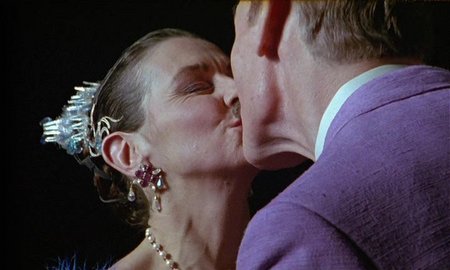
Keynes was an example of that rare thing: a sociable and entertaining economist. Not only was he married to a Russian ballerina, he was a member of the Bloomsbury set and a friend of Virginia Woolf. According to a biopic of Wittgenstein by Derek Jarman that I watched recently, he also wore rather natty and colourful clothes. The film, with a script by Terry Eagleton, is well worth watching.

How glamorous this all seems compared to the life of an academic economist today. The poor quality of work is surely related to the absence of creativity and joy. Now Keynes has even been excluded from the conference celebrating the 75th annivesary of his own major work, The General Theory of Employment, Interest and Money. The work cannot be ignored, but its relevance in this time of crisis is so threatening that only those who oppose it were invited, according to a scathing critique by Ann Pettifor.

21 June 2011

Co-operation and the Wealth of Nations

John Restakis, Executive Director of the British Columbia Co-operative Association, is on a lecture tour of the UK as part of the events to celebrate Co-operatives Fortnight. His recent book, Humanizing the Economy, raises a number of useful questions in terms of how the co-operative form can offer solutions to the disastrous failure of the market. He is lecturing at the House of Commons tonight, Edinburgh on Wednesday and Rochdale on Thursday. His lecture is powerful and inspiring and well worth a trip.

For me, his most powerful question was why the democratisation which took hold of political systems in the 19th century did not also take hold of economic systems. The co-operative movement, of course, was one example of successful economic democratisation, but John's view that we need to focus on 'taking the democratic revolution beyond politics and into economics' demands attention from politicians of all colours who espouse the democratic vision.

The failure of economic democracy has led to the atrophy of political democracy, as corporations buy politicians: we are 'citizens in politics but subjects in the marketplace'. (This reveals John's North American outlook, since I fear that in Britain we are still formally subjects in both realms.) While we enjoy voting rights in our political systems, 'our economic systems are still stuck in the 18th century'. Challenging the ideology of free markets, he asks how can we claim to have free markets when firms are still stuck in the ideology of command and control?

So much for John Restakis's theory. In terms of practice he shared the powerful example of the co-operative economy of the Italian region of Emilia-Romagna, Italy's most productive region. The regional capital of Bologna has a dynamic economy, with one enterprise for every 10 inhabitants. Across the region as a whole, 40% of GDP is generated by co-operative enterprises, mainly of small and medium size. The construction, agriculture, food processing, transport and social care sectors are all dominated by co-operatives.

There is no attempt to enforce a co-operative monoculture, however, with a variety of different types of owner-managed and worker-managed firms thriving in a vibrant and diverse local economy. John draws an analogy between this and a healthy ecosystem, where a variety of different species co-exist without any dominating the others.

The success of the co-operative businesses in Emilia-Romagna has spilled over into the wider economy bringing about what John referred to as 'the socialisation of capital'. There are high average pay rates, low levels of inequality, high levels of female employment. Co-operation has led to economic dynamism, with Bologna figuring 10th in the list of Europe's economic regions in terms of its productivity.

In conclusion, John Restakis offered a challenge to the movement as a whole to have more self-confidence in celebrating its successes. But beyond this there needs to be a development of co-operative theory and a willingness to argue politically and theoretically for co-operation as a more successful and more innovative form of economic life, as well as having the social and community advantages that it has long been known for.
.

20 June 2011

I Sat Down and Wept


The parallel being drawn between the failure of Lehman Brothers and the potential default of a sovereign nation makes clear the blurred nature of democratic and corporate accountability in the world of 21st century capitalism. Rating agencies are at liberty to value national and corporate debt by the same measures. This is not only irrational but also a deeply political play, since the democratic right of the people of any nation to reject the debt that the banks have loaded onto them has been marginalised.

Fortunately, in the country whose language the word democracy arises from, the people have not given up their democratic rights so easily. Their continued and increasingly violent presence in the streets is the visible exercise of the political reality that makes a nation an entirely different beast from a corporation. Shareholders and board members hold power through the exercise of property laws; politicians only hold power by the will of the people.

Our refusal to allow Lehman and Greece to be compared as though they were equivalent should remain our own commitment to a democratic future in which our rights to have power remain intact. But we need to match this with a demand for our politicians to exercise the power that we have delegated to them as our representatives.

The most infuriating aspect of the Lehman-Greece link is that in the nearly three years between the first default and the second, our politicians have apparently done nothing to restructure the global financial system or to gain a political handle over the banking system. By some combination of corruption, co-optation and lack of courage, the breathing space that was bought by the bailout of banks has not been used to ensure the future stability of the system, never mind its equity.

It was a long time from 1929 to 2008 – several generations in which memories of the previous disasters of capitalist finance faded - but there was really no excuse for policy-makers to remain ignorant of, to literally ignore, the obvious weakness and injustice of the liberal finance system their political retreat had allowed to flourish. Acting in our interests it was their duty to return to a form of global settlement like that reached at Bretton Woods, but with equity and sustainability as two additional guiding principles. Their failure to do so, their pusillanimous determination to allow the market mayhem to continue ruining human lives and planetary systems is a shocking abnegation of responsibility.

As viewed daily in Greece, as in Iceland, as soon to be seen in Ireland, Portugal and Spain, when politicians fail their people so disastrously economic instability rapidly becomes political instability. Few of those alive and voting today remember serious political instability, although it is less than 40 years since the three Mediterranean countries mentioned were all ruled by military dictators. There is so much more at stake here than the investments of finance companies and it is politicians with the vision to grasp that who are so seriously, and tragically, lacking.
.

16 June 2011

Chancellor Fails to Separate Retail and Commercial Banking

The loudest call for reform following the failure of the banking system in 2008 was that the risky activities undertaken by investment banks should not, in future, be able to threaten the deposits of ordinary working people. Osborne's speech at the Mansion House last night indicated that he is not going to separate these two very different aspects of UK banking activity.

The newspapers this morning draw attention to the proposal, adopted by the far-from-independent banking commission, to 'ring-fence' the savings and deposit side of banking from the global casino. Like the stock-market itself, this tired metaphor is drawn from the agricultural sector. But the beasts of the City are far more powerful than the politician's fence. Admissions that negotiations are still ongoing makes it clear who will decide the outcome. Needless to say, the citizens who have paid for the banking fiasco are not represented in these discussions.

If retail banking remains within the same company structure as its more glamorous, more profitable and more powerful investment-banking sibling, the efforts of all the most creative and Machiavellian minds within each global conglomerate will surely be bent towards finding ways through the barrier. Only a clear separation into separate companies, with separate boards pursuing different agendas can remove the threat of another crisis in future. The banks will refuse to settle until they have made this clear separation impossible, until they are sure that the ring fence is full of holes.

But this whole discussion addresses only half of the problem. Even if your own savings are safe, if the massive investment banks run into problems as a result of their absurd and irresponsible activity then, while they are large enough to provoke a systemic crisis, the risk that we will all have to carry the costs and take over their debts onto the public balance-sheet will remain. Another policy proposals is, if anything, even more important than the separation of retail and venture banking: to limit the overall share of the market held by any individual institution.

I would anticipate that most readers of this blog keep their own money far away from the commercial banking system, in a mutual organisation such as a building society or with the Co-operative Bank. However, we are still vulnerable to the threat that the uberbanks make to the credit system on which our national economy depends. Never was there a clearer example of when finding your own small-scale solution is not enough: we must rather find a way of turning public anger into a significant political challenge to the banking sector.
.