Showing posts with label MST. Show all posts

16 April 2013

Of Land and Liberation in Bahia


It is quite clear that a more locally based self-provisioning economy would require a change in the pattern of land ownership from that which prevails across the world today. This is why I am a strong supporter of land value tax and land reform, both of which are policies necessary for the transition to a bioregional economy. I am currently in the north-east of Brazil in the state of Bahia. Although it was the area first settled by Portuguese colonisers and then fought over by them, the Dutch and the French, much of its land is extremely arid and away from the rivers the possibilities for agriculture are very poor. Salvador, the colonial capital, was also the centre of the slave trade and still has a strong African influence in the culture and the cuisine, and for this reason was the place where the secret martial art of capoeira was developed.
The African and slave history also gave rise to some interesting patterns of community and land ownership. Most directly we have the quilombros, communities of escaped slaves who fled into the interior and set up villages where they reproduced their African culture and created new traditions of shared use of land and systems of commons. Perhaps the experience of slavery had convinced the of the importance not only of freedom but also of distributive justice? Many of these communities survive today and the federal government of Brazil is supporting them in finding ways to legally defend their access to and use of the land.

Since its independence Brazil has, in a limited sense, taken an emancipatory approach to land ownership. If land is left unused then it reverts to the state. Other communities, known as fundos de pasto, have taken advantage of this by moving onto this state-owned land to find the means for a sustainable livelihood. These communities are made up of poor rural farmers without their own land, and people from the cities who cannot make a living there. We met Gilca Oliveira at Salvador University who is part of a research team that has produced a wealth of research on these alternative land-based communities, including those connected to end MST movement.

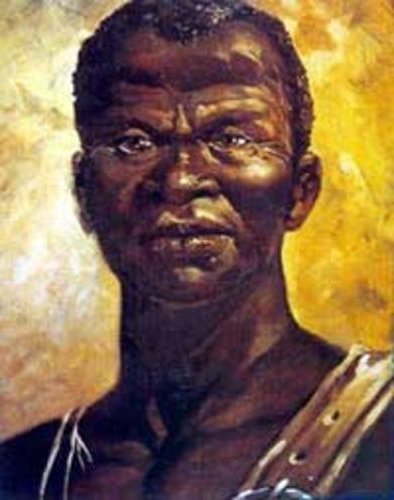
We also found here a hero to inspire resistance to neoliberalism. Zumbi dos Palmares is commemorated with a statue in one of Salvador's main squares. Zumbi was born in Palmares, the most famous and successful quilombro but was not content until all other slaves had been freed. He fought a violent struggle for emancipation and is today commemorated as the first freedom fighter for African slaves in the Americas with a national holiday in Brazil called the National Day of Black Conscience.
.

31 August 2012

From the Men of Property the Order Came

This week another part of the protection of the vulnerable is stripped away, as the government changes a clause in existing legislation to make squatting a criminal rather than a civil offence. The effect of this is to enable the wealthy to demand that the police undertake to remove squatters from their second or third homes at public expense, rather than them having to undertake civil action at their own risk. Squash, the squatters' support campaign have estimated the cost of squatting at £790m, money we will pay to defend the property interests of the wealthy.

In spite of its urban and somewhat risqué image, squatting is a noble and ancient tradition. Originally it meant squatting on land, laying claim to the right to provide for your own subsistence, to which the building of accommodation was secondary. Much as the members of Brazil's MST do today, our ancestors challenged the feudal land system by occupying farmland and providing for their needs. It was the shift of the economy towards a labour market and industrial production that changed the focus of squatting towards merely the need for a home.

The BBC quotes Housing Minister Grant Shapps as saying 'No longer will there be so-called 'squatters rights'. Instead, from next week, we're tipping the scales of justice back in favour of the homeowner and making the law crystal clear: entering a property with the intention of squatting will be a criminal offence.' This is a typical example of the divide-and-conquer tactics of the Tories, who ignore the fact that many of those who are homeless are in work, but are paid too poorly to afford the profiteering level of rents in many of our most expensive cities, and especially in London.

The answer to the homelessness crisis is for government to intervene in what should never have been a housing market. As a society we consider that education and health are too important for the vagaries of the market to control their allocation and their price - why not with housing too? And Tory ideologues should read their history and recognise the tradition of squatting as much more akin to the empowered economic response at the individual level that they so vehemently espouse than they might feel comfortable with.
.

16 March 2012

Squatting North and South

The Brazilian landless peasansts movement MST ( Movimento dos Trabalhadores Rurais Sem Terra) is well known for its advocacy of land reform to enable people to establish sustainable livelihoods through their own labour, rather than having to engage in exploitative labour-markets and unsustainable economies. I'm glad to see that they now have a website, telling the history of their movement and inspiring similar change in other societies.

In the urban context of Brazil the MST have now been joined by the MTST, the movement of roofless workers (Movimento dos Trabalhadores Sem-Teto). As they say on their website:

Nosso objetivo é combater a máquina de produção de miséria nos centros urbanos, formar militantes e acumular forças no sentido de construir uma nova sociedade. A ocupação de terra, trabalho de organização popular, é a principal forma de ação do movimento. Quando ocupamos um latifúndio urbano ocioso, provamos que não é natural nascer, viver e morrer pobre e oprimido. Não aceitamos a espoliação que muitos chamam de sina.

'Our goal is to combat the production machine of poverty in urban centres, to train militants and gain strength in order to build a new society. The occupation of land by people's organisation is the primary mode of action of the movement. When we occupy idle urban land we prove that is not natural to be born, to live and to die poor and oppressed. We do not accept the dispossession that many call fate.'

As well as their direct action in the form of land occupation, these people of the shanty towns, whose daily life is a struggle against violence and dispossession, communicate their social and political message through a theatre of the oppressed.

I've raised the question recently of why we don't think of the people who live in our deprived communities as 'landless poor'. Since our 'great transformation' to a capitalist economy took place so long ago we accept that without a job you are worthless, whereas in the countries of the South people's first demand is for land so that they can grow their own food, gather fuel, make furniture and so on, rather than having to enter into an unequal contract with an employer.

This demand does not arise often enough in the post-industrialised economies of the West, however the demand for land for housing does. It finds its latest expression in the campaigning group Squash, which is lobbying against government plans to illegalise squatting. This legislation, clearly designed to serve the interests of the land-owning, property-owning class who the Conservatives have always served, will cost £790m. according to research carried out by Squash. More importantly it will deprive the homeless and the landless with the thin vestiges of the right to indepedence that our legal system still respects.
.