Showing posts with label economic growth. Show all posts

3 February 2014

A Common European Home


Cameron's meeting with Hollande last week underlined again our isolation from the central European debates, while last month's vote European Parliament indicates the strong majority in favour of total free movement within Europe. While it would be wrong to suggest that there is anything like consensus over this issue, since there are already many anti-immigration members of the Parliament and their numbers are likely to swell after May's elections, there is a centre of gravity around the idea that once within the Europen home, citizens are free to seek better lives in other member states.

The moral commitment supporting this position, although often unstated, is that everybody within the European Union has an equal right to a certain standard of living, usually measured in purely material terms. This position has been driven particularly by German members who extended their own sense of responsibility for their brothers and sisters in the East to make this a Europe-wide understanding that the countries of Central and Eastern Europe deserved a lifestyle similar to those in the West. After the fall of the Soviet Bloc it seemed churlish not to welcome Czechs, Bulgarians and others who had escaped communist domination into the wealthy and free culture of western Europe.

At an ideological level this position is fine, noble even; the problem arises when it runs up against the limits of political economy. We are being asked to share the wealth of Europe more equally between citizens who begin with wildly different levels of income. Yet this is not to be a managed process it is to be a process determined by ambitious individuals who follow their dreams in a random process. Aside from the financial transfers through the European Convergence mechanism, what was the policy to ensure and equalisation of incomes? Perhaps equally important, where was the questioning about quality of life, and about what the accession countries might be losing in their headlong rush to consumerism?

It adds to the complexity that the movement to equalise standards of living between very different societies has taken place against a backdrop of increasing corporate power, as trade unions have been attacked and governments have retreated from strong regulation. In this context the Enlargement made available to global corporations a skilled and yet poorly paid workforce, and whether these people arrived in our countries or stay in their own countries it is hard to argue that they do not put downward pressure on wages and cause jobs to move eastwards. Given that at the time of Enlargement many western democracies had socialist leaders, it is quite extraordinary that they did not include in the deal some requirements for minimum wages, even the transition towards an EU minimum wage. If the assumption behind policy-making is really that we seek a Europe where citizens are equal in civil rights and also in standards of living then such a policy was always essential.

The vision of Europe we were sold was one where our cousins to the east would rise upwards to meet us in our halcyon luxurious lifestyles. Yet such a vision always required rapid economic growth across the European economy, for without it equality was bound to mean those in the pre-2003 EU states facing a lower standard of living. Any growth that Europe experienced in the past decade was largely credit driven, and now that the bubble has burst growth is hard to come by and hence the pressure for equalisation has become a downward pressure on living standards in EU member states.

As a Green Economist I am entirely committed to equality but I must also recognise the limits of the ecological system on which we depend. I cannot share the irrational exuberance of a socialist politician I once discussed this with who told me 'I'm an old fashioned socialist: I believe everybody should have a Ferrari'. The widespread and growing evidence that we have reached the ecological limits, whether we are thinking about climate change or biodiversity loss, suggests that the earth simply cannot sustain Ferraris for all. The choice for European citizens is whether we follow the Nationalists in keeping our Ferraris and leaving the Romanians with Ladas, or whether we accept an egalitarian future even if it might mean rehabilitating the bicycle.
.

28 September 2013

How Public is Public Money?

Of the many deceitful slogans which the Conservatives used when they came to power the 'bonfire of the quangos' has perhaps had the least justification in practice. A whole range of boards and partnerships are creeping back into existence, responsible for public money, but with no clear sense of how the public view will be represented or how they will be accountable to the public.

My own particular source of concern is the Local Enterprise Partnership. These were first mooted some 18 months ago, at which point they had no clearly defined powers and there was apparently no funding to accompany the establishment of such bodies. I remember thinking how unlikely it was that anybody would take on the challenge of local economic regeneration without any financial support. How foolish I was, and how cunning others were, because over time large amounts of public money have been promised to these bodies that those with foresight or perhaps inside information made their own.

The GLEPs are supposed to represent the country's 'natural economic areas', although there is no theoretical consideration about how such economic areas might be defined. The work that the LEPs might undertake is limited by the narrow and pro-growth conceptualisation of the problem we face according to the government rubric:

'Our economy is currently too dependent on a narrow range of industry sectors. We need an economy driven by private sector growth, with business opportunities evenly balanced across the country and between industries. We also need to reduce burdens for businesses, particularly in terms of lower tax levels, planning and other administrative burdens.'

While this is the rhetoric, the reality is that those who have always had their snouts in the trough of government subsidy to business have created structures to funnel public money in their direction, resulting in a map of meaningless and unplanned areas on the government website.

In Gloucestershire our LEP is called G1st LEP, G1st being an unsuccessful regional development company that has already received large amounts of money from the county but with no clear evidence of its having created jobs or brought prosperity. But it cleverly included the letters LEP in its name, built a new website, and was accepted by the Business Secretary as being the regeneration body for the whole of our county. At this stage, remember, there was no indication that money was coming and so it had no serious competitors.

But money has certainly followed and with increasing speed since the publication of the Heseltine report No Stone Unturned--In Pursuit of Growth, a report which has only proved that under those stones lurk a regiment of people who have made a career of parroting the same pro-growth, pro-business catechism without the need for a track-record of success. All money to be invested in regeneration by central government, or £2 billion of it in 2015-16, will now be funneled through these bodies. Yet there has been no opportunity for the public to become involved in discussions about how they might like to see regeneration happen, whether economic growth is in fact beneficial for local communities, whether we might focus on resilience and sustainability instead, or whether bioregions might be better natural economic areas than the curious regions illustrated in the map.

In Stroud we are particularly angry that money which was originally our money is now to be sent to the LEP, to be controlled by people with no democratic authority over this money, and we have to make a case to have some of it spent in our area. When the government cut our central funding grant they told us that in future we would receive money through a New Homes Bonus, already requiring us to build new houses in order to be properly funded. But now 40% of this New Homes Bonus will go to the LEP directly and we will not see any of it back unless we subscribe to the sort of view of economic development that this unaccountable body dictates. There is also talk of funding for further education institutions similarly passing through the LEP before being received by them.

Martin Whiteside, one of our district councillors here in Stroud, has referred to the birth of the GLEP as the immaculate reconception of the quango and, while we feel the parentage of our county body is particularly unclear, the accountability of these bodies that will use public money according to their own political priorities and without proper accountability should be questioned everywhere that LEPs lurk.

 .

7 August 2013

How is the Chancellor Engineering a Pre-Election Boom?

After several years of dire economic news, suddenly, just about the time when parliament went into recess, the stories about the British economy changed. Almost overnight we moved from gloom to boom, with Osborne celebrating 0.6 growth and the euphoric tone of the journalists outstripping that of the Chancellor. With an election now just 18 months away, and it being certain to be an election dominated by arguments about the economy, this has made me rather suspicious about how this return to economic joy is being measured, and how the dark forces of monetary manipulation might be influencing it.

I am not alone in my suspicion that the happy economic news may not be all that it seems. The traditional left, however, limits its critique to the suggestion that the increase in GDP is being driven by the retail sector and is based on withdrawn savings by those who can no longer wait for their wages to rise. Frances O'Grady's claim that 'Britain's fragile recovery is being propped up by families raiding their piggy-banks' is supported by ONS data showing that the ratio of household spending to savings has fallen from 7.4% for 4.2% in the past year.

What first made me nervous about the 'return to growth' was Faisal Islam's excessive use of superlatives on his Channel 4 News report on Monday. He has Capital Economics predicting 1.5% growth in this quarter alone, with huge increases in both business confidence and business investment. This caused me to think back to the stories of companies sitting on cash (largely accumulated as a result of the government's loose monetary policy via QE) because of fear of investing it. There was much discussion of how the Chancellor might encourage companies to invest their cash-pile to revive the economy, including the suggestion that he might impose a levy on them for stagnant cash holdings.

Has the Chancellor somehow found a way of encouraging UK corporates to start spending the £750bn. they have in reserves (incidentially, a figure equal to half the UK's annual GDP)? Certainly his proposal for tax relief on smaller companies, who apparently hold around £120bn. of the total, which was included in last year's autumn statement, may be beginning of have an impact. But is there some other incentives for companies to invest, or threat do them if they do not?

The less subtle evidence of engineering is in the form of the incentives to restart the housing market, that well worn engine of unsustainable booms past. The Help to Buy scheme supports purchasers of new homes to take on mortgages that the banks think they cannot afford to pay. It is thus risky in two regards, since it will tend to keep house prices at the sort of excessive levels that led to the financial crisis in the first place, and at the individual level it risks households losing their homes if interest rates rise. It does appear to have stimulated a boom in house building which helps to explain the higher GDP figures.

The manufacturing and production figures illustrated in the graphic make it clear that the hype over recovery is seriously overdone. Production and manufacturing - the sort of real economic activity that the Conservatives claimed they wanted us to rebalance towards - is still struggling and nowhere close to the level it was before the financial crisis. The improvements we see appear to stem much more from monetary manipulation and the shuffling of cash between various elite players. This sort of wealth does not find its way down to those on average incomes who are struggling with the consequence of the capitalist disaster of 2008.

However, the Conservatives are playing the politics of this extremely cleverly. The Chancellor is likely to come out of his term in shared government with the public sector smashed up and Labour vowing to continue with these destructive and draconion cuts. The recession has also led to a culture of fear amongst employees, who are accepting reduced wages and appalling working conditions, as exemplified by the zero-hours contract. A success for George and his cronies but the real problems around the failure of manufacturing, the ongoing trade deficit and lack of resilience in our local economies and the iniquitous failure of the banking system are all yet to be addressed.
.

7 December 2012

Life Beyond Growth: Join the Evolution


I have been puzzling over why the Office for Budget Responsibility, which was only established to give prudent and honest advice about what is happening in our economy, has failed so resolutely to either predict or interpret the current economic position. It hasn't helped that the man chosen to head up the organisation was qualified in communications more than in economic analysis, but perhaps there are deeper answers to the questions about why it keeps predicting more growth than we are likely to achieve.

If you were on the edge of a paradigm shift, would you honestly be able to look across the gulf and believe what you were seeing on the other side? Or, rephrasing that question with relevance to the purpose of this blog, would you be able to believe that growth will never return and that your job as an economist should be not predicting its returning, or even trying to bring about its return, but rather encouraging the evolution of the economy towards a structure that does not rely on growth?


Let's spend a while looking at the figures. Osborne's disastrous revisions to his growth figures, which lead him to conclude that we must face at least another six years of grinding austerity, are based on more OBR predictions. The OBR now suggests that the 0.8% growth they predicted just eight months ago has been transformed into 0.1% of contraction. Next year's growth, they suggest, while less than their March prediction of 2%, will still be a determinedly positive 1.2%. The fantastical nature of these predictions arises from the fact that the past always looks worse than in OBR-land, but the future continues to look rosier. This suggests a failure of judgement and the need for a reality check. The OBR economists appear to be psychologically incapable of responding to a world beyond growth: being incapable of imaging such a world they gaily predict it away.


What is the view from Euroland? Even the German economy, the final functional growth engine, is beginning to sputter. In spite of our view of Germans as sober and rational, the disease of fantastical prediction appears to be spreading their way. The Bundesbank is making even more rapid adjustments to its predictions, suggesting the German economy will grow by just 0.4% next year compared with its June forecast of 1.6%. When a key economic variable can be reduced so drastically in just five months you realise that you are dealing with psychological rather than statistical error.


So what does the economy beyond growth look like? At present, without any evolution in our expectations and basic parameters, it looks very grim indeed: desperate pressure on the planet, growing inequality as the fight over the shrinking pie continues, and increasing social tensions as the elites refuse to accept that a future without growth means they cannot continue to extract disproportionate amounts of wealth as they have in the past.
Yet as a green economist I can see the end of growth as part of a story with a decidedly happy ending. Economic growth, and the inequality and ecological pressure it brings with it, could be replaced by an economy where the objective was balance and harmony between people, other species, and the planet we share. How can we move towards such an economy? What might its social and political institutions look like? How can we begin to create a culture that makes this not just a possible but a desirable future. It is to answer these questions that Green House is hosting a seminar in London on 19 December in partnership with the Green European Foundation. Please join us - and join the evolution.
.

26 July 2012

Green House Launches Post Growth Project

The growth figures released yesterday were shocking. They demonstrate clearly that Osborne is mistaken in his view of how an economy works, a point I have been repeating in somewhat tedious fashion over the past couple of years. The clear pattern of economic growth following the election and the massive cuts in capital expenditure make it clear to anybody who is not an utter ideologue that there is plain choice between a Keynesian or Hayekian response to this latest, and biggest, capitalist crisis. The Hayekian response smashes up the public sector and enhances the power of capital; the Keynesian response, if skilfully executed, might return us to over-stimulated growth.


Of course amongst green economists there is a totally different way of looking at this. Economic growth has ended: fact. Attempts to restimulate it via pressure on consumers, monetary injections, and so on will be chaotic and unpredictable, but more importantly will only add to the ecological pressure caused by an economy growing out of control. The alternative? Accept that the growth has ended, even welcome it, and begin to plan for a stabilised, post-growth economy.

To explore the implications of such a worldview the Green House thinktank has launched its Post-Growth Project. The aim of the Green House Post-Growth project is to challenge the common sense that assumes that it is ‘bad news’ when the economy doesn’t grow and to anatomise what it is about the structure of our economic system that means growth must always be prioritised. We plan to set out an attractive, attainable vision of what one country would look like, once we deliberately gave up growth-mania – and of how to get there. And we intend to find ways of communicating this to people that make sense, and that motivate change.

Over the next year we will be publishing a series of reports addressing various aspects of the transition to a post-growth economy. What will this mean for our politics, and how can we ensure that a post-growth society is characterised by social justice and democratic decision-making? What would the macroeconomics of post-growth look like, and how can we pay for excellent public services in such a scenario? How can we ensure that, this time around, we don't just return to the mistaken idea that we must stimulate further aggregate demand, whatever the planetary cost?

Please join this debate: read our papers, feel free to offer ideas of your own, and join us as we set up events and activities to spread the message. Together we can build a better world: the end of economic growth is an opportunity, not a tragedy.
.

29 May 2012

Austerity Breeds Outrage

Two reports came out on 21st May which was also, incidentally, my birthday. The first was the report of the Environmental Audit Committee's inquiry into the Green Economy. I gave evidence there on behalf of the Green House thinktank, following up on our written evidence. I was in an evidence session with David Powell from Friends of the Earth and a representative of the TUC. It is encouraging that, as well as Green House's evidence, WWF, NEF, and others were clear that a green economy will be one that respects planetary limits and recognises that we must restructure our economy so that it does not rely on perpetual growth.

The Committee chose as its media hook for the report the fact that deregulation is undermining attempts to move towards the green economy, a rather dull angle which failed to arouse much interest. The real political question of our time - whether we can ever or should ever return to growth - was ignored. Perhaps it just seemed too far from the hegemonic idea of the urgent and unassailable need to return to growth as the only solution to our economic woes.

The EAC's report focuses rather on 'current patterns of economic growth', in spite of clear evidence from Tim Jackson about the fact that decoupling growth from resource and energy use is a chimera. However, they did quote at length a list of groups who took a hardline view on growth:

'52. Many saw the Government’s current agenda as focusing too much on growth and too
little on measures to protect the environment and ensure environmental limits are not
breached. David Powell of Friends of the Earth believed that current government policies, including Enabling the Transition, were being presented as “growth first ... let’s try and make it green and anything else we can do is fantastic”. . . We also heard concerns that, without a definition of sustainable development being included within the new planning guidance, proposals to introduce a “presumption in favour of sustainable development” would lead to unsustainable development. RSPB believed greater thought should be given to whether the “continued push for growth is in fact in conflict with prosperity in the longer-term”. The Packaging Federation believed there was little sign that the Government understood a “real danger of a fundamental incompatibility between UK climate change goals and economic growth”. Green House believed that a strategy of export-led growth was incompatible with a green economy as “it relies on lengthy supply chains and hence an extensive use of energy and so contributes to climate change”.'

Our idea of 'transitional growth' was also cited: 'Green House believed that economic growth was only possible in the short-term as part of a transition strategy to move us towards an economy that is in a steady state. Such economic growth would be confined to replacing infrastructure to enable self-reliant economies stabilising the economy within our national resource limits.' And we were quoted as stating that 'because of the “unfeasible nature of the increased efficiencies required and the nature of rebound effects associated with technological improvements”, seeking to decouple economic growth and production from CO2 emissions “is an example of psychological denial”.

Oxfam also gave evidence, which brings me to the second report I wanted to draw attention to: Be Outraged: There are Alternatives, an attack on the present absurd economic policies being followed by Western nations from a group of development economists published by Oxfam. The report states 'that the austerity approach to reducing deficits and debt is counterproductive; it is leading to a downward spiral of incomes and government revenues making it more difficult to reduce the debt and undermining growth prospects.' The report is authoritative and useful in bringing together clearly and critically the consequences of misguided economic policies including: 'More than 10 per cent of European adults are unemployed, up by 50 per cent since 2008. More than one in five- 22% - youth under 25 are unemployed and in some countries over 40%' or 'Top incomes have soared in the UK and US especially: the globe’s richest 1 per cent (61 million people) earn the same as the poorest 56 per cent (3.5 billion)'.

Overall, though, the report is fairly standard Keynesian stuff and, although Oxfam gave evidence to the EAC and devote attention to the structural problems with the growth economy, this line of their work does not seem to join up with their attempts to challenge austerity politics. As the Green Party has found, resolving the tensions between social justice and a steady-state economy is not always easy, but no organisation or research institute that has understood the need to respect planetary limits should now be producing arguments for growth.

Green House is running a personalised campaign to shift the media position on this question: please join us. We are targeting the BBC, on the basis that we pay for them, and because their email addresses are easy: firstname.familyname@bbc.co.uk. Each time you hear the hysterical statement of the universally acknowledged need to return rapidly to growth, please email the person who has made this statement, giving them some links to clear statements of the destructiveness of this position. You can refer to work by Green House, the EAC report, or more broadly the website of CASSE - the Centre for the Advancement of a Steady State Economy.
.

7 February 2012

Stop Digging

Although we seem to be living in an era of forgetfulness when it comes to the insights of John Maynard Keynes, to my mind we should characterise the disastrous economic situation of the late-phrase capitalist economies in terms of a chronic failure of aggregate demand. In a famous passage in the General Theory Keynes describes how different cultures have dealt with the problem of insufficient demand:

‘Ancient Egypt was doubly fortunate, and doubtless owed to this its fabled wealth, in that it possessed two activities, namely, pyramid-building as well as the search for the precious metals, the fruits of which, since they could not serve the needs of man by being consumed, did not stale with abundance. The Middle Ages built cathedrals and sang dirges.’ (The General Theory, 1936: Bk 3, chap. 10, sect. 6)

Keynes is credited with solving the problem of the Great Depression through his theory of the multiplier effect of demand stimulation policies, although others have argued that in reality it was the switch to a wartime economy that put the capitalist economy back on an even keel. This was effectively a strategy of making enormously big holes across Europe and then spending around another decade gradually filling them in; this is obviously to make no comment on the loss of life and livelihood that was the price of this strategy.

Keynes’s argument was for injection of demand by public authorities, but the private sector had already begun its strategy of increasing demand before the stock-market crash and subsequent Depression. Although I should say at the outset that I do not believe that changing the sorts of light-bulb used can save us from ecological catastrophe, it may be that understanding the behaviour of the Phoebus cartel of light-bulb manufacturers just might.

The group was made up of all the leading manufacturers of the day including General Electric, Osram and Philips. At a meeting in Geneva in 1924 the Phoebus group decided to enforce a maximum life-time of the light-bulb at 1000 hours, eschewing the superior design already achieved by Edison around the turn of the century. A long-lasting life-bulb reduced their profits and so innovation was restricted. The oldest light-bulb in the world is still in place and casting light over the Livermore Fire Station in California: it is 110 years old.

The strategy of creating demand through the deliberate design of obsolescent or poorly made goods flourished in the years following the war. It was parodied in a contemporary film by Alexander Mackendrick called The Man in the White Suit. In the film Alex Guinness played Sidney Stratton, a research chemist working in the textile industry. Stratton’s expensive research to discover a miracle fibre that is not subject to the depredations of dirt or wear is successful and uses it to make a luminous white suit. His moment of glory is short-lived, however, since both managers and unions recognise the dangers posed by a suit that does not need to be replaced: Stratton is sacked and pursued both metaphorically and actually by both sides in the age-old capital-labour battle. Eventually he discovers that his suit is vulnerable to sunlight, but he remains undeterred and we leave him in the final scene striding purposefully off to another research laboratory where his attempts to create genuinely sustainable products will be doubtless be greeted with horror.

In the early days of the enthusiasm for creating demand its proponents were quite explicit about the various techniques that they used. King Camp Gillette, inventor of the disposable razor, argued that 'We have the paradox of idle men, only too anxious for work, and idle plants in perfect conditions for production, at the same time that people are starving and frozen. The reasons is overproduction. It seems a bit absurd that when we have overproduced we should go without. One would think that overproduction would warrant a furious holiday and a riot of feasting a display of the superfluous goods lying about. On the contrary, overproduction produces want.'*

We can be cynical about the profit motives of the industrialists, but there was a genuine desire to avoid unemployment and the suffering it caused, and to stimulate demand by any means to make sure there were enough jobs to go around. The strategy worked within its own terms, but it has left us in the disastrous position where efficiency in terms of energy and resources has no place in the modern economy. Now that we recognise the limits to growth we need to unpick this Keynsian solution and rethink the role of aggregate demand as the solution to our economic woes.

*quoted at Slade, G. (2006), Made to Break: Technology and Obsolescence in America (Cambridge, Mass.: Harvard UP),p. 10.
.

28 May 2011

Less Osborne More Hobsbawm*

Advocates of a market view of the economy and proponents of further and faster globalisation both tend to seek inspiration from the work of Adam Smith, who is taken to be the founding father of market economics. Smith's work The Wealth of Nations, was published in 1776, only on the cusp of the industrial revolution and before its technological advance had had the chance to impact widely on social and economic structures.

The economist who better represents the theory that has come to dominate our modern world is rather David Ricardo, whose most famous work Principles of Political Economy and Taxation was published in 1817, some 40 years after that of Smith, and whose work set the parameters for the world of laissez-faire capitalism and export-led growth that we inhabit today. Ricardo was attempting to theorise the economic reality of a world where labour and land were made subject to market forces, as they had been to only a limited extent in Smith's day.

In an excellent article in the New Statesman back in March, Robert Skidelsky made clear George Osborne's debt to Ricardo, whose economic theories he rather brutally summarised in the following phrase: 'It goes like this: the private sector creates wealth and the government squanders it. The smaller the government – the less it taxes and spends – the more the economy will thrive.' Moreover to a Ricardian there is no fundamental distinction between taxation and government borrowing: borrowing is merely deferred taxation.

This is an article of faith, unsupported by empirical evidence. It is clearly politically attractive to politicians like Osborne, who seek to abolish the public sector and see in the current deficit the opportunity to do so. But what if Keynes was right, and cutting borrowing in a time of economic crisis merely leads us into a downward spiral? Ricardo's theory might be all very well in a flourishing economy, with a functioning money system, but in an economy that has been destroyed by its own parasitic financial system, it might be the worst possible medicine.

Economics is a complex system, where numerous variables interact in ways that can never be predictable. This is why jokes about one-armed economists are just foolish: there will always be a multitude of answers to every question and predicting the future is a mug's game. Hence the wise economist leaves his options open, and makes sure that the politicians he is advising do the same.

Interpretations of history are rarely more helpful. We simply cannot know whether the spending that led to the deficit was necessary to prevent us entering a lengthy and devastating Depression. Can we really believe that, had he been Chancellor when the bubble burst, Osborne would have stood by and seen the global financial system collapse? In my more troubled moments I think that perhaps he might have done, such is his ideological faith in the market.

Back in March, when Skidelsky wrote his article, economists were already downgrading growth forecasts, and they have been doing so ever since. This week economists from the the Organisation for Economic Co-operation and Development (OECD), the very body that Osborne has proudly announced as supportive of his economic approach, downgraded their forecast for UK economic growth from 1.5 to 1.4 per cent this year and 2.0 to 1.8 per cent next year. Osborne, increasingly beleaguered, and increasingly isolated, persists in his Ricardian illusion.

*Thanks to the imaginative marcher who came up with this slogan for the 26th March.
.

5 April 2011

Elite's Marginal Productivity Challenged by Nobel Renegade

In spite of the fact that he is clearly right, and that he is in the sort of position where holding critical views could have some impact, I cannot feel warm about Joseph Stiglitz. It must be the years he spent at the World Bank drawing a fat salary while the Bank's policies caused starvation and death. Although the black mark is partially expunged by his dissent and subsequent sacking, it still recalls a bank boss who takes his large pension and then joins the Rotary Club after retirement. And of course Stiglitz has never returned his 'Nobel Prize', suggesting he still revels in the acclaim of his dubious peers.

But bitterness aside, let's enjoy his latest offering published in this month's Vanity Fair. The article begins with the commonplace and yet shocking statistic that the top 1% of US citizens take nearly a quarter of the country's income each year and own 40% of its wealth. As recently as 1986 the comparable figures were 12% and 33%. This extraction of value by the plutocrats has been bought largely at the expenses of the professionals.

There is a useful phrase in the article which I think we could make much of: 'Trickle-down economics may be a chimera, but trickle-down behaviorism is very real.' The lifestyles of the wealthy, which in an earlier age we would have considered beyond our station, are now advertised to us as something to aspire to. Such luxuries and long-haul flights and fast cars are considered as rights, and greens who suggest that they may need to be restricted are painted as killjoys if not oppressors.

Stiglitz argues rightly that the justification for the growth in inequality on the basis that wealth creators have to be rewarded so that the economy can boom, and that this additional output will benefit us all, is unsupported by evidence. What he fails to notice, and what makes the need to end the extraction of value by the wealth so urgent, is that this economic growth is actually undermining the conditions that enable any economic activity at all to take place.

This is the argument offered by the eco-socialists, their so-called 'Second Contradiction of Capitalism'. A green economist would probably find a more grounded and passionate response: the greed of the wealthy, and the economic growth it is linked to, is killing the planet and destroying all our lives.
.

4 June 2010

The Ideology of the Cancer Cell

It is hard to question the prevailing view that we are on the brink of an even more serious economic collapse than the one we squeaked through some two years ago. What first emerged as a private-sector debt crisis has not been solved, it has merely been shifted into the public sector. The first round of default was solved by the publics of Western democracies taking on private debts on a previously unimaginable scale. Now that we have reached our collective overdraft limit, what are we supposed to do next?

The conventional wisdom, which is being used to determine the economic policy of our new government, is that we need to 'tighten belts'. The 'we', as usual, is loosely defined. As somebody who works for the public sector I am already having to drill new metaphorical notches into the over-strained leather. Small private-sector businesses have already fasted beyond salvation while the fat cats of the finance sector appear to still be lapping up cream.

Other economists, who are rather bizarrely are being referred to as 'radical' are resisting the cuts. Their rationale for this is entirely reasonable: cutting the public sector will choke off the recovery and force us back into a recession which is likely to be deeper and longer than the last. How will they pay for this? Their solution, which undermines the use of the 'radical' label, is to fiddle with the figures in the short term and wait for economic growth to sort the problem.

A green economist can be the only real radical, and a green economist must reject any policy that relies on economic growth to get us out of this mess. We have the advantage of a really radical proposal: restructure the global financial system so that the debt is really removed - and for good. This would ensure future stability and equity.

As green economists we can also raise two other policy options which would seem too market interventionist for orthodox economists. First, we can take charge of the banks that 'we' own and direct their lending towards domestic, small-scale and sustainable businesses. Second, we can recommend that such government money as is spent is intentionally directed towards the sectors where it will have the maximum multiplier effect. On the one hand this means increasing the wages of lower-paid public-sector workers, who are much more likely to spend the money than save it. On the other, it could mean asking serious questions about changing our approach to trade so that we control the flow of money from our failing economy to the flourishing Chinese economy. Too radical for you, Professor Blanchflower?

28 January 2010

The Human Firm

The fanfare of publicity surrounding the announcement that the UK had experienced - hold your breath! - 0.1% of growth during the last three months of 2009 was embarrassingly inappropriate in several ways. First, and most obvious, was the awkwardness of statisticians behaving like media tarts. The explanation can only be their fear of facing the Osborne axe if the Tories get elected.

Second was the celebration over such a paltry increase - and in the quarter when all economists and statisticians know that the bulk of retail activity takes place every year. This time the Christmas effect will have been exaggerated because of what used to be January sales taking place before Christmas. The data are seasonally adjusted to attempt to eliminate these effects, but given the unpredictability of both business and consumers in these extremely unusual times, 0.1% growth is really no news at all. The dismal 'growth' trend in the figure from ONS illustrates this.

The most intelligent commentators extrapolated from this 0.1% to tell us how much smaller our economy is now than it would have been if we had followed 'a normal growth path': around 6%. I wonder how many people will think about that and realise what it teaches us about the rapid nature of expansion when we are following 'the normal growth path'. Growth on growth, exponentially in this manner, is what is driving us to the planetary abyss. As the authors of Limits to Growth identified, humans have a problem grasping the abstract reality of exponential growth. To help explain they included this story in their report:

'French children are told a story in which they imagine having a pond with water lily leaves floating on the surface. The lily population doubles in size every day and if left unchecked will smother the pond in 30 days, killing all the other living things in the water. Day after day the plant seems small and so it is decided to leave it to grow until it half-covers the pond, before cutting it back. They are then asked, on what day that will occur. This is revealed to be the 29th day, and then there will be just one day to save the pond.'

So we can learn lessons about the weakness of statistics and the crisis of economic growth, but I think I have detected a more encouraging sign: that people are not behaving like rational economic men. The statistics on which economic planning is based are monetary figures, so they include all the pointless shuffling around of money that a financial economy indulges in. If you are interesting in the real economy of stuff, then the second figure is more illuminating: manufacturing industry in the UK has fallen off a cliff.

And yet unemployment has not risen anything like as rapidly as predicted. In economic theory, a recession results in firms automatically reducing output and cutting prices and wages. They do this in a competitive process and without regard to the human costs. Yet in this recession we have seen firms negotiating with workers to share the available work and the income that is available to be paid out in wages.

Is this merely an adaptation of capitalism, where we willingly cut our own wages? I would prefer to interpret it as humanity rather than flexibility in the workplace. Since the steady-state economy implies a level of economic activity considerably lower than that which prevailed before the recession, this bargaining over the value of production is something that should be facilitated and extended.

4 January 2010

Hope Dawns in Disagreement

Regular readers of this blog will know that a recurring whinge relates to the strict orthodoxy of economics - as taught in universities and advised to governments - and the hegemony which it exercises across the globe in these early years of the 21st century. But first the Queen questions what economists are up to, and now from the pink pages of orthodoxy themselves, comes evidence of the paradigm beginning to crack. When FT journalists bewail the lack of uniformity amongst orthodox economists then times are becoming interesting indeed.

Krugman's questioning of free trade - a concept that traditionally stands alongside economic growth as one of the twin pillars supporting the edifice of the neoclassical catechism - is clear proof that the economists are ruffled. While capitalism is endowed with what my Marxist-Lentilist friend refers to as a Protean ability to adapt, the process is not a painless one. And while it is taking place is the moment of the system's greatest weakness.

Alongside Krugman the article cites Robert Barro, whose work on growth convergence argues that countries and regions within those countries will naturally tend towards similar rates of growth in the medium term. Evidence has failed to support this theory, but that has not held back the eminent economist's career. He is now accusing those economists who support major public spending to prevent a Depression of turning to magic. Once this criticism comes out of the armoury, no economist will be safe. From white-coated scientists to snake-oil witch-doctors, they will lose their sacred status at a stroke. Or am I just attempting to dream new year hopes into reality?

Clive Crook, for that, dear readers, is his name, is most upset by the fact that the politics that has always lain behind the neoclassical hegemony is being revealed as the profession comes under pressure for having allowed massive financial and environmental crises to occur. The consequent cracks allow space for the barbarians to rush in to challenge the citadel.

19 August 2009

An Economy with Soul


I can't remember who it was who told me that we need to overturn the God of the market: GOD = Grow Or Die. This is obviously a necessary condition for moving our economic life in a sustainable direction, but we need something deeper and more soulful to go along with this: a shift in consciousness.

For a while I've been thinking about a paper to respond to R. H. Tawney's Religion and the Rise of Capitalism in which he argued that the personal ethics engendered by the Protestant religion were crucial in underpinning the development of the new economic system as it developed in the 16th and 17th centuries. I see a parallel with the growing interest in mystical and anti-materialist religions amongst many of those who are building the new economic and social paradigm.

I spent the nicest three days of my holiday at Druid Camp, handily close in the Forest of Dean and - naturally - blessed with beautifully sunny weather (although we were all quite capable for worshipping mother nature in all her different moods). In contrast to the academic conferences I go to, the workshop conveners all spoke from their hearts and so were constantly enthralling.

From a shaman I learned how the world appears if you believe that every aspect of the material reality has a deeper spiritual reality or consciousness. How could this type of understanding contribute to a new consumption ethic, one which includes reverence for the natural world? Many of us do this to some extent when we give thanks for our food, or recall the spirit of the animal that died if we are meat eaters.

The traditional role of the shaman in animistic societies is to move between the seen and unseen worlds. S/he is also responsible for identifying what parts of the physical world can be taken into our bodies, hence their role in experimenting with mind-altering (because toxic) plants. The deeper relationship with the enviroment we are seeking as we build a sustainable economy can be usefully informed by this sort of wisdom.

3 April 2009

The Paradox of Thrift


It was Keynes's view that 'Practical men, who believe themselves to be quite exempt from any intellectual influences, are usually the slaves of some defunct economist.' He is now become the posthumous eponym of his own adage, as the economic crisis forces the resuscitation of politically unpopular measures that are no longer appropriate to our times.

Commenting on the horrific consequences of capitalism's last truly spectacular bust, Keynes noticed that people's natural response to be cautious in times of crisis could actually make the problem worse. In the typically natty way he had with language Keynes referred to this conundrum as 'the paradox of thrift'. While saving at the individual level may be entirely noble, at the level of an economy as a whole, and especially one with insufficient demand, it can be devastating. Japan is often taken to be the paradigmatic case.Wise he may have been, but Keynes did not recognise the planetary frontier and so his plans to save us from Depression through exhorting us to consume more are now dangerously outdated.

Thrift has been a concept with a serious PR problem for several decades, as built-in obsolescence and the fashion industry have generated wants and desires that were then satisfied by production and consumption. In my paper 'Sen and the Art of Market-Cycle Maintenance' I sketch the environmentally destructive consequences of this capitalistic modus operandi.

The paradox itself is easily resolved once we think our way beyond the ideology of capitalism, since its existence results from the underlying assumption that individual behaviour is only helpful if it fits in with that system's logic. We are, in reality, free to make much wider choices than whether to spend or save, or what variety of washing powder to buy. We are free to choose a whole new economic system based on balance rather than growth and justice rather than inequality.

3 January 2007

Growth or Balance? Cowboy or Spaceman?

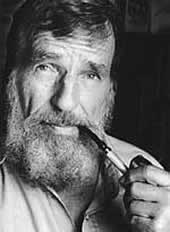
The major objective of the economy as it works now is to grow, and the more it grows the happier the politicians are. Green economists would have more sympathy with the view of the radical US environmentalist Edward Abbey that ‘Growth for the sake of growth is the ideology of the cancer cell’. In the capitalist ideology it does not matter that economic growth is destructive and does not increase human well-being; it only matters that there is more money changing hands in the global market. There is too much emphasis on standard of living, usually measured in purely material terms, and not enough on quality of life.

For green economists growth is the major problem, not only because it is usually bought at the expense of the planet, but also because it is actually reducing our quality of life. The lifestyles we expect in the 21st century have caused the extinction of species on a massive scale, and by causing climate change are actually threatening our future as a species. Yet they have not even improved our lives. Richard Douthwaite makes this case forcefully in his book, The Growth Illusion. He gives many examples of ways in which economic growth has reduced our quality of life. Technology has reduced skill in work, lowered wage levels, and increased stress. Increased production has generated pollution and inequality, themselves the cause of physical and mental disease. Communities and personal relationships have been undermined by intensified patterns of work.

Other research has shown that economic growth does not increase well-being or happiness, as illustrated in the figure in the case of the USA, which is the most advanced capitalist economy in the world with the highest levels of consumption, and yet the data shows that since the early 1960s rates of happiness have been falling, while rates of psychological illness have been increasing. The figure shows rates of happiness decline in the UK since 1946 as consumption levels rise inexorably (from a lecture by Richard Layard at the LSE).

This has been shown again by a study which measured increases in anxiety levels among American young adults and children between 1952 and 1993. Anxiety levels rose steadily during that time, to such an extent that the average level of a normal child today is the same as that which was found in children who had been sent for psychiatric treatment in the 1950s.

Green economics proposes a move away from a focus on economic growth and towards a ‘steady-state economy’, which is the only type of economy that can be sustainable in the long term. In the steady-state economy, the planetary frontier is respected and the earth is therefore the most scarce resource. This leads us to conclude that we should use it as wisely as possible, maximising its productivity while at the same time minimising our use of it. We should therefore focus more on quality and less on quantity.

In order to achieve the steady state we need to pay attention both to the number of people who are sharing the earth’s resources, and also their level of consumption. We should also be aware of the regenerative capacity of the planet, our only basic resource, so that non-renewable resources should not be removed at a rate faster than renewable substitutes can be developed, and our outputs of waste, including pollution, should be limited to the level where they do not exceed the planet’s carrying capacity.

The issue of resources is crucial. Economics is defined as the study of how resources are or should be distributed. Green economics suggests a whole change of perspective on our attitude to resource use, one that can be portrayed as a shift from the perspective of the cowboy to the perspective of the spaceman. The cowboy views his world as infinite and lives without a frontier in an environment where there are endless resources to meet his needs and a vast empty area to absorb his wastes. The attitude of the spaceman could not be more different. He is aware that his environment is very limited indeed. He only has available the resources that can be fitted into his small capsule, and he is only too familiar with his own wastes.

Green economists suggest that we need to leave behind the attitude of the cowboy and move towards that of the spaceman. Nowhere is this more necessary than in the world of business, where the gunslinger stills rules supreme but where viewing the earth as our only available spaceship would be a better guarantee of our survival as a species:

A businessman would not consider a firm to have solved its problem of production and to have achieved viability if he saw that it was rapidly consuming its capital. How, then, could we overlook this vital fact when it comes to that very big firm, the economy of Spaceship Earth and, in particular, the economies of its rich passengers? (Schumacher, 1973: 12).